
Strip Footings in Toowoomba Poured Correctly Every Time
Strip Footings
Strip footings in Toowoomba require more than a concrete truck and a trench. They require proper engineering, the right depth for local soil conditions, correctly placed steel reinforcement, and a pour that meets the specs your engineer has signed off on. That’s exactly what we deliver for homeowners, owner builders, and construction teams across Toowoomba and the Darling Downs.
A strip footing is a continuous band of concrete poured into prepared ground that runs along the base of walls. It distributes the weight of the structure above — walls, floors, roof — down into stable ground below. Get it right and everything built above it has a solid, level base to work from. Get it wrong and you’re looking at cracking, settlement, and costly rectification work before the first course of bricks is even laid. Our team pours strip footings to engineering specifications on residential and commercial projects throughout Toowoomba, handling everything from the initial mark-out to the finished pour so your project can move forward with confidence.
What Is a Strip Footing and How Does It Work
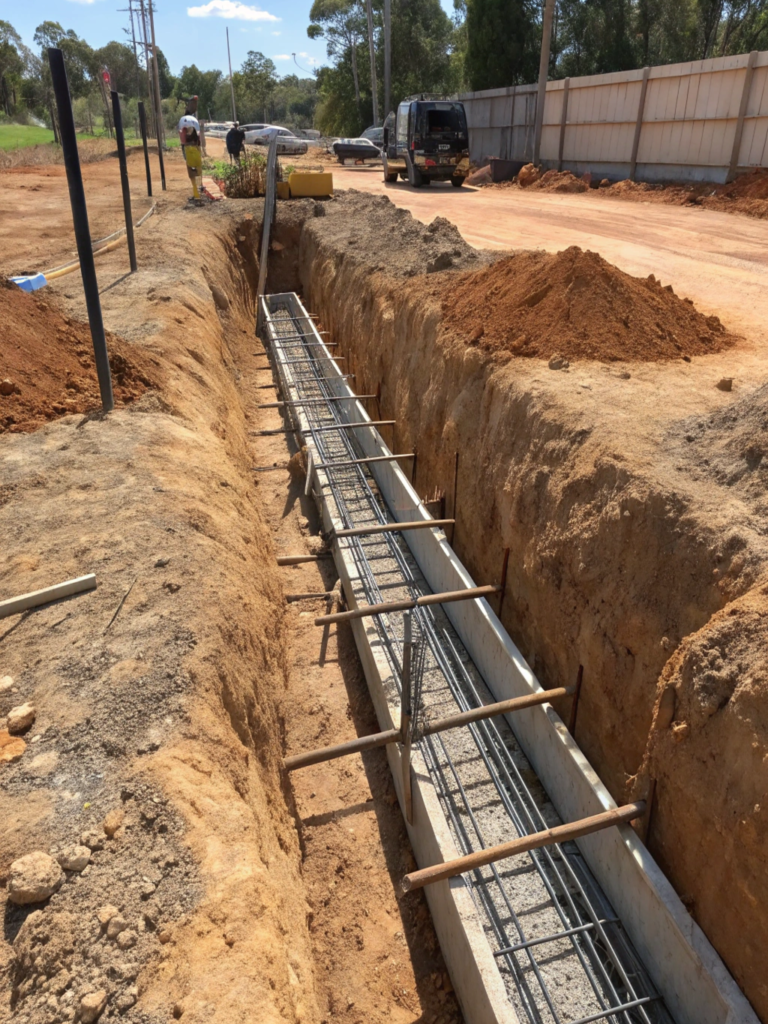
A strip footing is a continuous band of concrete poured directly into excavated ground, running along the full length of a wall line to carry the load of the structure above. Unlike isolated pad footings that support individual posts or columns, a strip footing provides uninterrupted support beneath walls — spreading the weight of bricks, blocks, framing, and roofing evenly into the ground below.
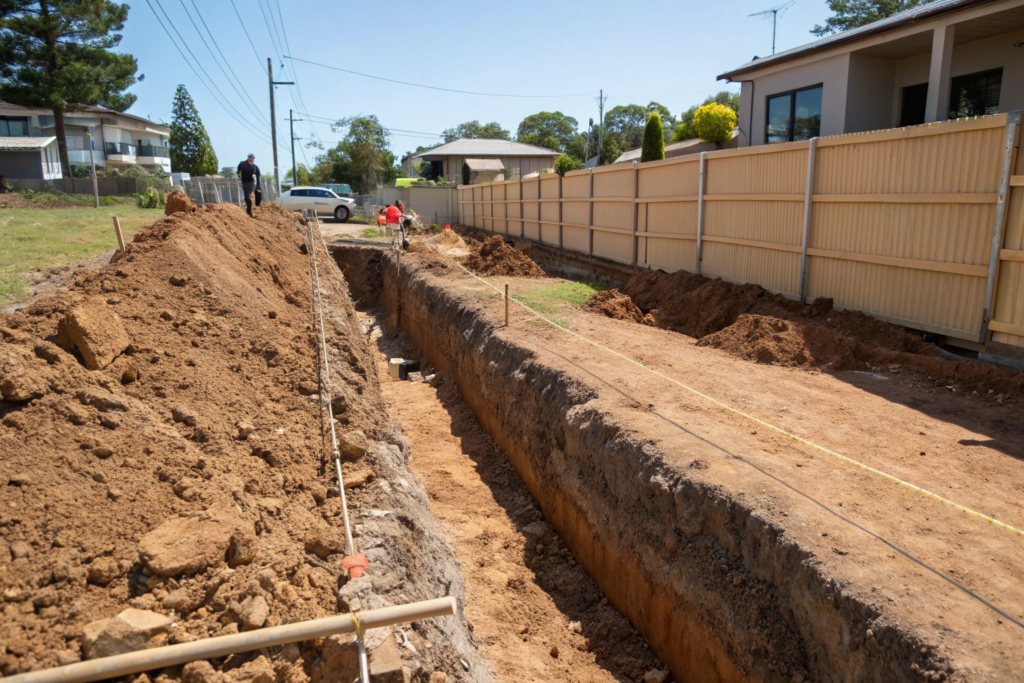
The footing sits below finished ground level, poured into a prepared trench that has been excavated to the correct depth and width as specified by a structural engineer. Steel reinforcement bar is placed inside the trench before the concrete is poured, giving the footing the tensile strength it needs to handle ground movement and loading without cracking.
Once the concrete has fully cured, bricklayers or framers have a stable, level base to build from. Every wall built above a strip footing depends entirely on what sits underneath it — which is why getting the pour right from the beginning is what our team is focused on delivering across every Toowoomba project.
Strip Footings for Every Project Type in Toowoomba
Granny Flat Strip Footings Toowoomba
Granny flat construction in Toowoomba is subject to the same engineering requirements as any residential build. The strip footing beneath a granny flat needs to be poured to the correct depth and reinforced to carry the full wall and roof load above. We work directly from your engineer’s plans to deliver a compliant, accurately poured footing that gives your granny flat project a solid start.
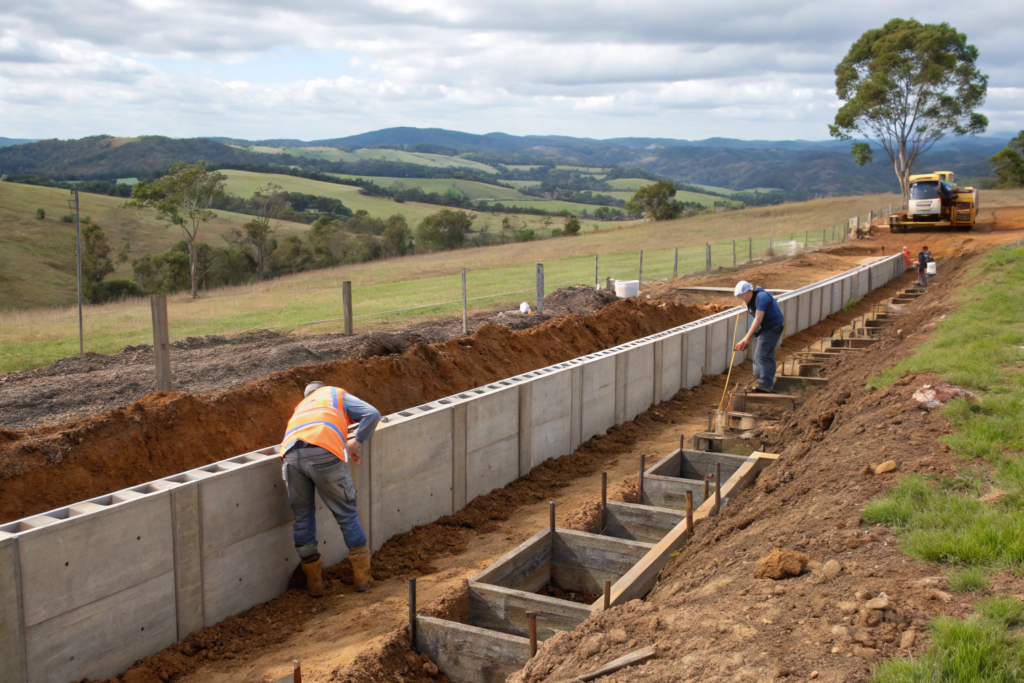
Brick and Block Garden Walls — Why the Footing Matters
A brick or block garden wall is only as solid as the footing beneath it. Without a properly poured continuous concrete footing, walls shift, lean, and crack as the ground moves beneath them — a common issue in Toowoomba’s reactive soils. We pour reinforced strip footings to the correct width and depth for garden wall projects of all sizes, giving the brickwork above a stable base that holds long term.
Strip Footings for Light Commercial Buildings on the Darling Downs
Light commercial construction across the Darling Downs demands footings that meet engineer specifications and pass council inspection without issue. We pour strip footings for warehouses, sheds, retail fit-outs, and other light commercial structures, working to the project’s engineering drawings and coordinating with builders and project managers to keep construction schedules on track from the ground up.
Steel Reinforcement in Strip Footings — What Goes In and Why
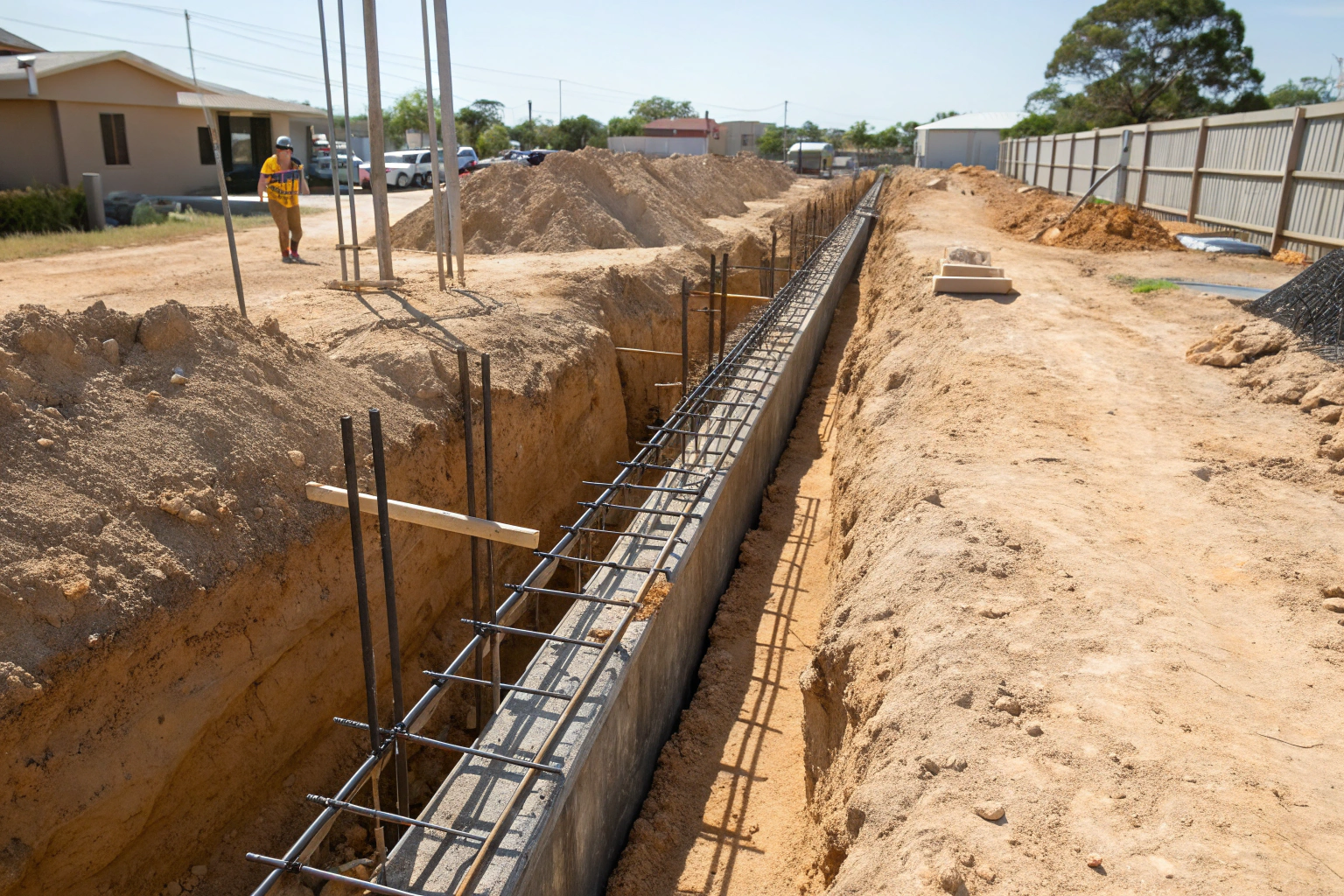
Concrete handles compressive loads well but has limited resistance to tension and bending. Steel reinforcement bar — commonly called reo bar — is placed inside the footing trench before the pour to give the finished footing the tensile strength it needs to perform under load and resist ground movement over time.
The size, spacing, and placement of the reo bar is specified by a structural engineer and varies depending on the wall type, load requirements, and soil conditions at the site. In Toowoomba’s reactive clay soils, correct reinforcement placement is particularly important — ground movement during wet and dry cycles places real stress on footings, and under-reinforced concrete can crack and shift in ways that compromise everything built above it.
Our team places steel to the engineer’s specifications on every job, with bar chairs used to hold reo at the correct height within the trench before the concrete is poured. Nothing gets buried until the placement is right.
Why the Pour Quality Matters as Much as the Design
A strip footing can be designed to the correct dimensions and reinforced exactly to specification — and still fail if the concrete pour itself is handled poorly. Pour quality is where engineering intent meets on-site execution, and it is the part of the process that determines whether the finished footing actually performs the way it was designed to.
Common pour failures include concrete segregation from over-vibrating or dropping concrete from too great a height, low cover over the reinforcement bar that leaves steel exposed to moisture and corrosion over time, uneven pour levels that give bricklayers an inconsistent base to build from, and premature loading before the concrete has reached adequate strength.
Our team manages every pour with attention to placement, compaction, and surface finish. We use the correct concrete mix design for the application, confirm adequate cover to reinforcement throughout the trench, and finish the top surface to a consistent level that bricklayers and framers can work from directly.
Toowoomba’s climate adds another consideration — curing conditions during hot or dry weather require active management to prevent surface cracking and moisture loss that weakens the finished footing before construction above it begins.
Strip Footings vs Other Footing Types — Which One Do You Need
When Pad Footings Are Used Instead
Pad footings support individual posts or columns rather than continuous walls. They are the standard choice for pergolas, decks, carports, and steel frame structures where point loads need to transfer into the ground at specific locations. Where a structure uses a combination of walls and posts, a project may require both pad footings and strip footings working together across the same site.
When Raft Slabs Are the Better Option
A raft slab combines the footing and floor slab into a single poured element, distributing the building load across the full footprint of the structure. On highly reactive clay soils — common across parts of the Darling Downs — a raft slab is often the engineered solution for new home construction. Strip footings remain the correct choice where wall-only support is required without an integrated floor slab.
How We Help You Choose the Right Footing Type
We review the engineering requirements, assess the site conditions, and recommend the footing solution that suits the specific build. For projects where the footing type hasn't yet been confirmed by an engineer, we can point owner builders and homeowners toward the right professional resources to get the correct specification in place before work begins.
How We Pour Strip Footings From Mark-Out to Cure
Every strip footing we pour follows a clear process from the first day on site to the finished slab edge. Here is how it works from start to finish.
Reading the engineering plans comes first. We work directly from the structural drawings to confirm footing dimensions, reinforcement requirements, and depth specifications before any ground is broken.
Marking out the trench lines gives the excavation crew a precise guide to work from, keeping wall lines square and footing widths consistent throughout the site.
Excavating to the correct depth and width is non-negotiable. Toowoomba’s soil conditions mean depth requirements vary between sites, and we follow the engineer’s specifications exactly rather than estimating.
Preparing the base involves compacting the trench floor and confirming a consistent, stable surface before reinforcement goes in.
Placing the steel reinforcement is done to specification, with bar chairs holding reo at the correct height throughout the trench.
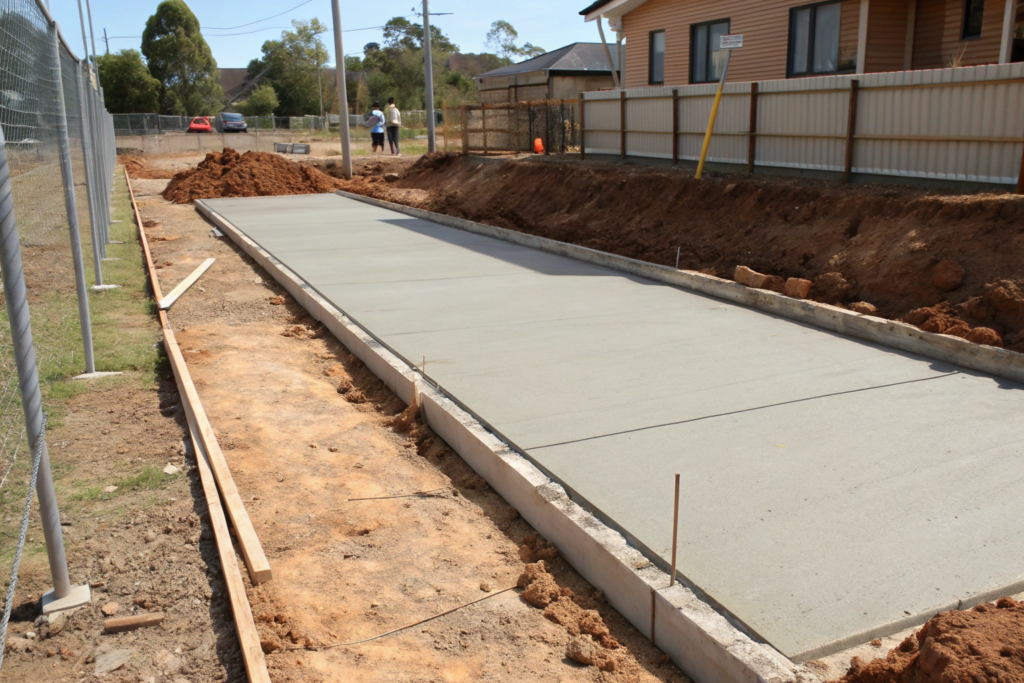
Pouring the concrete is carried out to the correct level, with the surface finished ready for bricklaying or framing above.
Curing is allowed to complete fully before any above-ground construction begins — no shortcuts.
Extensions and Additions — Getting the Footing Right First
Home extensions in Toowoomba present a specific set of footing challenges that new builds don’t. The new strip footing needs to carry the additional wall and roof load of the extension while sitting alongside an existing structure that has already settled into the ground. Getting the depth, width, and reinforcement right from the start is what prevents cracking and movement at the junction between old and new.
Our team works from the structural engineer’s drawings for every extension footing we pour, confirming that the new footing is excavated to the correct depth and reinforced to the specification required for the additional load being placed above it.
Matching New Footings to Existing Structure
Where a new strip footing meets an existing footing or slab edge, the connection detail matters. We follow the engineer’s requirements for dowel bar placement and tie-in details to create a footing that works with the existing structure rather than independently of it — reducing the risk of differential settlement and wall cracking above.
Toowoomba Soil Conditions and How They Affect Footing Depth
Toowoomba and the broader Darling Downs region sit on predominantly reactive clay soils that expand when wet and shrink when dry. This seasonal movement places real stress on footings that haven’t been designed and poured with local conditions in mind, and it’s one of the primary reasons footing depth and reinforcement specifications vary from site to site across the region.
Reactive Clay Soils on the Darling Downs
Reactive soils require footings that reach stable ground below the active zone — the depth at which seasonal moisture changes cause soil movement. Pouring a strip footing too shallow in reactive clay is one of the most common causes of wall cracking and structural movement in residential construction.
Site Classification and What It Means for Your Footing
Every site in Toowoomba carries a soil classification that directly informs the footing design. Classifications range from Class A through to Class E and beyond, with higher reactivity sites requiring deeper, more heavily reinforced footings. Your structural engineer determines the site classification and specifies the footing accordingly — and our team pours to that specification exactly.
Frequently Asked Questions About Strip Footings in Toowoomba
A strip footing is a continuous band of reinforced concrete poured into the ground along wall lines to carry the load of the structure above and transfer it into stable ground below.
Depth depends on the site’s soil classification. Toowoomba’s reactive clay soils often require footings to reach below the active zone, with depth specified by a structural engineer based on individual site conditions.
In most cases, yes. Any footing associated with a structure requiring development approval will need a building permit. Your builder, certifier, or local council can confirm the specific requirements for your project.
Yes. Strip footings are a common footing solution for granny flat construction, provided the design meets engineering requirements for the specific site classification and wall loading involved.
Expansive clay soils in the Darling Downs shrink and swell with changes in moisture. This movement places additional stress on footings, which is why footing depth, width, and steel reinforcement in this region are designed specifically to account for soil behaviour.
Get a Free Quote on Your Toowoomba Strip Footing Project
Whether you’re building a new home, adding an extension, constructing a granny flat, or starting a light commercial project on the Darling Downs, our team is ready to help you get the footing right from the ground up. We pour strip footings to engineering specifications across Toowoomba and surrounding areas, working with homeowners, owner builders, and construction teams who need reliable, compliant work they can build above with confidence.
Getting started is straightforward. Contact us with your project details and engineering plans if you have them, and we’ll provide a clear, obligation-free quote on your strip footing job. Call us today or fill in the enquiry form and we’ll be in touch promptly.
