
Concrete Foundation in Toowoomba Built to Last From the Ground Up
Every build in Toowoomba starts with a decision that most people don’t think about until something goes wrong. A mate of mine spent three years watching cracks creep up the walls of his new home — doors that wouldn’t close right, tiles popping off the bathroom floor, gaps opening up around the window frames. Turned out the slab wasn’t poured to the engineering specs. The builder had cut corners on the prep work, and the whole structure paid the price.
That’s the thing about concrete foundations — you don’t see the problem straight away. But it shows up eventually, and when it does, fixing it costs a whole lot more than getting it right the first time.
We pour concrete foundations for residential and commercial projects across Toowoomba and the wider Darling Downs region. New homes, extensions, granny flats, sheds, commercial buildings — if it needs a solid base, that’s what we do. Every job is poured to the engineering plans, no shortcuts, no guesswork.
Toowoomba’s soil conditions aren’t always forgiving. The reactive clays across a lot of the Darling Downs move with moisture — they swell when wet and shrink when dry. That means your foundation isn’t just holding up a building, it’s working against ground movement every single day. Getting it designed and poured correctly from the start is the only way to protect everything built above it.
If you’re building in Toowoomba and you need a foundation done properly, this is the right place to start.
What Makes a Good Concrete Foundation
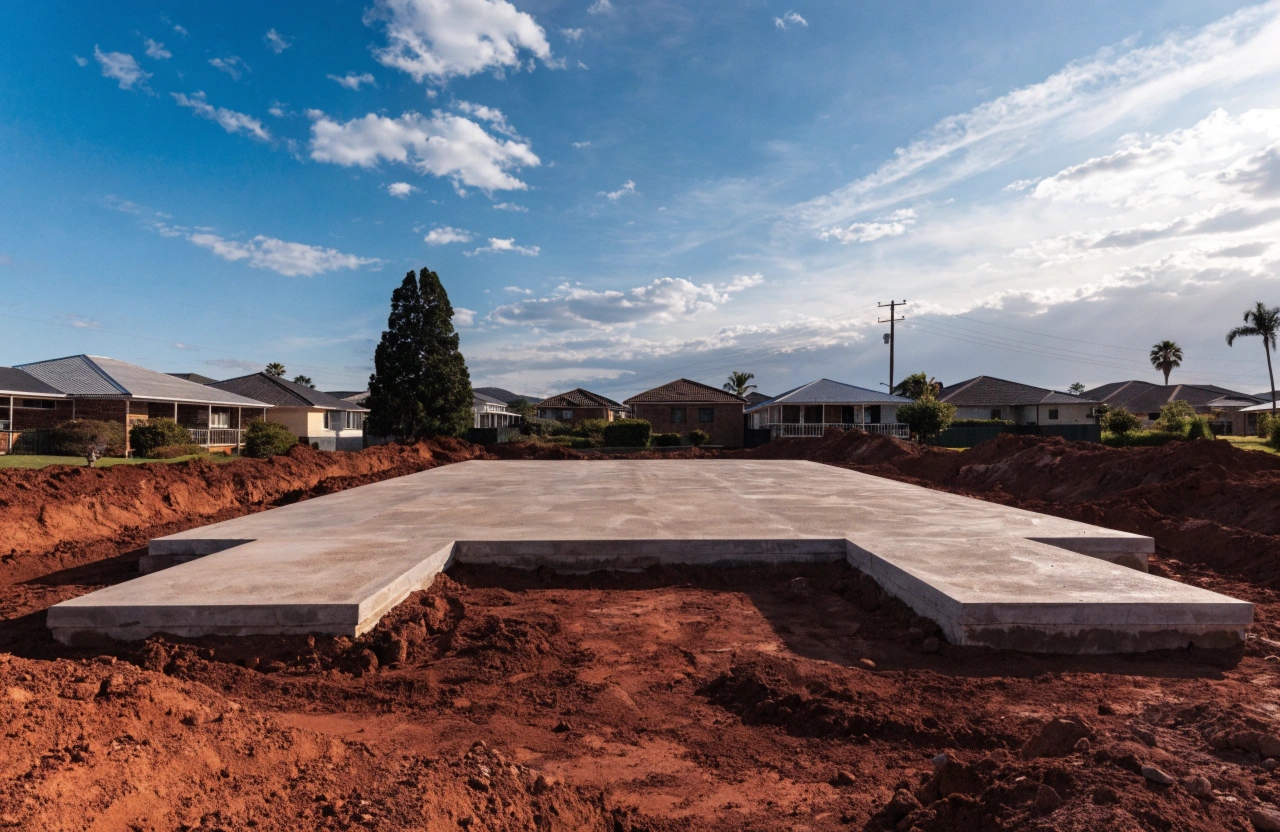
A concrete foundation looks simple from the outside — it’s a slab of concrete sitting in the ground. But there’s a lot happening underneath that surface that determines whether a building stays solid for decades or starts showing problems within a few years.
The four things that matter most are depth, reinforcement, base preparation, and concrete strength.
Depth — The foundation needs to go down far enough to sit on stable ground. In Toowoomba, where reactive clay soils are common across many suburbs, that depth is specified by the engineer based on the soil report for that particular site. There’s no one-size-fits-all answer.
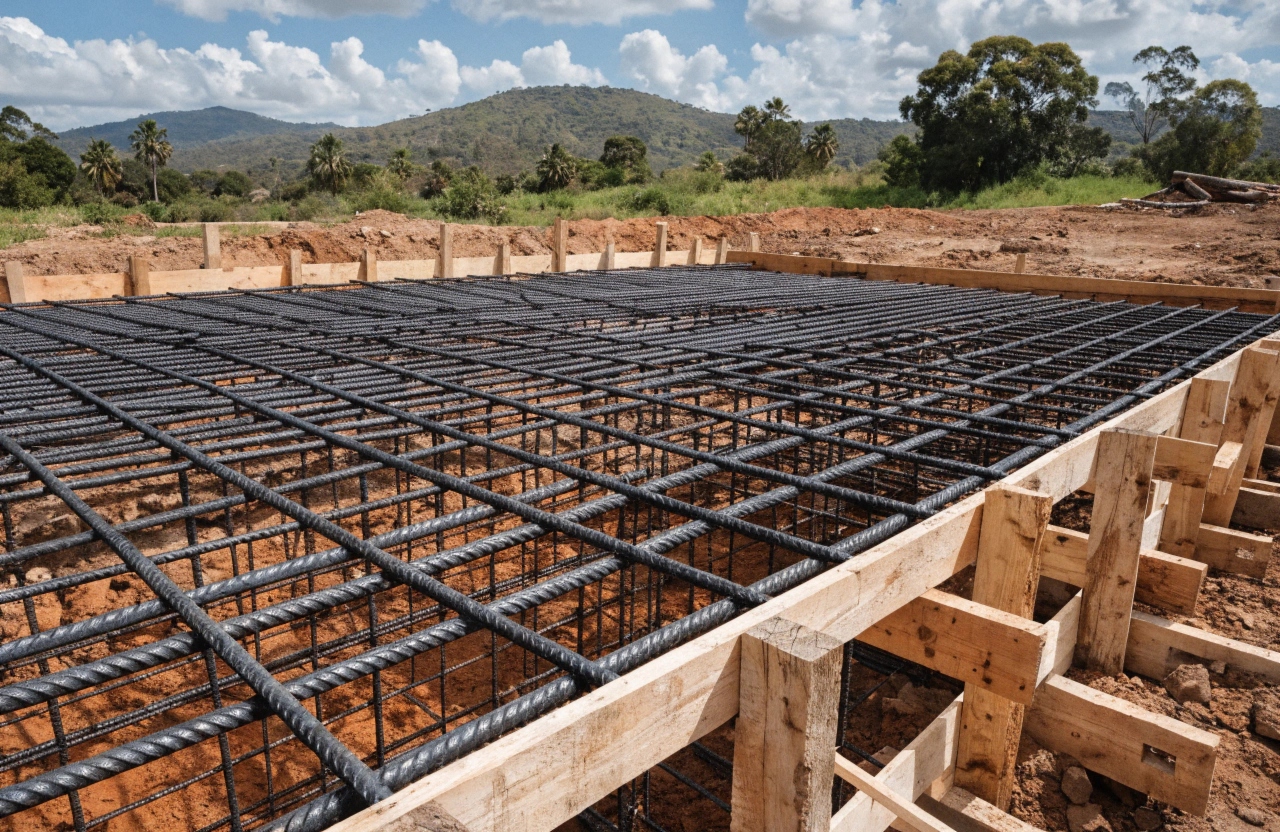
Reinforcement steel — The reo goes in according to the engineering plans. Size, spacing, cover from the bottom — all of it is specified for a reason. Getting the steel layout right is what gives the slab its tensile strength and stops it from cracking under load or ground movement.
Base preparation — The ground underneath the slab has to be properly compacted and levelled before anything gets poured. A loose or uneven base is one of the most common causes of slab problems down the track.
Concrete strength — The mix is specified in the engineering plans, usually expressed as an MPa rating. We don’t swap it out for a cheaper mix to save a few dollars.
Every job we do in Toowoomba is built to the engineer’s specs from the ground up. That’s not a sales pitch — it’s just how foundation work has to be done if you want the building above it to last.
Types of Foundation Work We Handle in Toowoomba
No two foundation jobs are exactly the same. Here’s a breakdown of the main types of work we handle across Toowoomba and the Darling Downs.
New Home Foundations
This is the big one. A new home slab is the most important pour on any residential build — everything from the frame to the roof is sitting on top of it. We work from the structural engineering plans, prepare the site correctly, and pour to the specified concrete strength. Whether it's a slab-on-ground or a waffle pod design, the process doesn't change — it gets done right.
Home Extensions
Adding a room, a garage, or an outdoor area to an existing home still needs a properly engineered foundation. The new slab has to sit correctly relative to the existing structure, and the soil conditions under that specific part of the block still need to be accounted for.
Granny Flats
Granny flat foundations are often treated as an afterthought — they're not large structures, so people assume the foundation requirements are relaxed. They're not. A granny flat still needs a slab that's engineered for the site conditions and poured to spec.
Commercial Buildings
Commercial foundations carry heavier loads and are subject to stricter compliance requirements. We work with construction teams and owner builders on commercial projects across the Darling Downs, reading off the structural plans and delivering the pour to specification.
Why the Darling Downs Demands More From a Concrete Foundation
Toowoomba isn’t like building on the coast. The Darling Downs has its own set of conditions that affect how a foundation needs to be designed and poured — and if you’re not across them, you’re already starting behind.
The reactive clay soils that cover large parts of the region are the biggest factor. These soils respond to moisture — they swell when the ground is wet and shrink back down when it dries out. That constant movement puts stress on any slab sitting above it. A foundation that isn’t deep enough or isn’t reinforced correctly will show that stress in the structure above it, sometimes within the first couple of years.
Toowoomba’s elevation also brings temperature swings that are more pronounced than most Queensland locations. Hot summers, cold winters, and the occasional heavy rainfall event all affect the ground conditions under a slab over time. Concrete that’s poured without accounting for these conditions won’t perform the same way as one that’s been properly engineered for the site.
Then there’s the variation between suburbs. Soil conditions in Rangeville aren’t the same as they are in Harristown or out toward Westbrook. That’s why a soil report and a proper set of engineering plans aren’t optional extras — they’re the baseline for doing the job correctly in this region.
We’ve poured foundations across Toowoomba and the Darling Downs long enough to know what the ground here demands. That experience shows up in every job we do.
Working With Owner Builders and Construction Teams
A big part of our work in Toowoomba comes from owner builders and construction teams who need a reliable concreter to handle the foundation stage of their project. It’s one of those parts of a build where you really can’t afford to get the wrong person involved.
Owner builders carry a lot of responsibility on their shoulders. You’re managing trades, coordinating approvals, keeping the project on timeline, and making decisions that affect every stage of the build that follows. The last thing you need is a concreter who shows up late, doesn’t read the plans properly, or cuts corners on the base prep because they’re trying to squeeze in another job.
We show up when we say we will. We read the engineering plans before we start, not halfway through the pour. And we don’t make calls on the day that should have been worked out in advance.
Construction teams working on larger residential or commercial projects across the Darling Downs get the same approach. If your project has a tight program, we work with your schedule. If the plans change before we’re on site, we talk it through before anything gets dug. Communication on a foundation job matters as much as the concrete itself — a miscommunication at this stage can hold up every trade that follows.
If you’re an owner builder or managing a construction project in Toowoomba and you need a foundation crew you can rely on, get in touch and we’ll work through the details with you.
How We Pour a Concrete Foundation — Start to Finish
Most people hiring a concreter for a foundation job have never watched one get done from scratch. Here’s exactly what the process looks like on a Toowoomba job site.
Reading the Engineering Plans
Before anything gets dug, we sit down with the structural engineering plans. The plans tell us the foundation depth, the reo layout, the concrete strength required, and any specific conditions that apply to that site. Nothing happens until we know what we're building.
Excavation
We excavate to the depth specified in the plans. On reactive clay sites — which covers a good portion of Toowoomba — that depth matters. Too shallow and the slab is sitting in ground that moves with the seasons.
Base preparations
The excavated surface gets compacted and levelled. Any soft spots get addressed before we move forward. This step gets rushed on too many jobs — it shouldn't.
Reinforcement Steel
The reo goes in to the layout specified in the engineering plans. Bar size, spacing, and cover from the base are all set to spec. We don't freehand the steel layout.
Formwork and The Pour
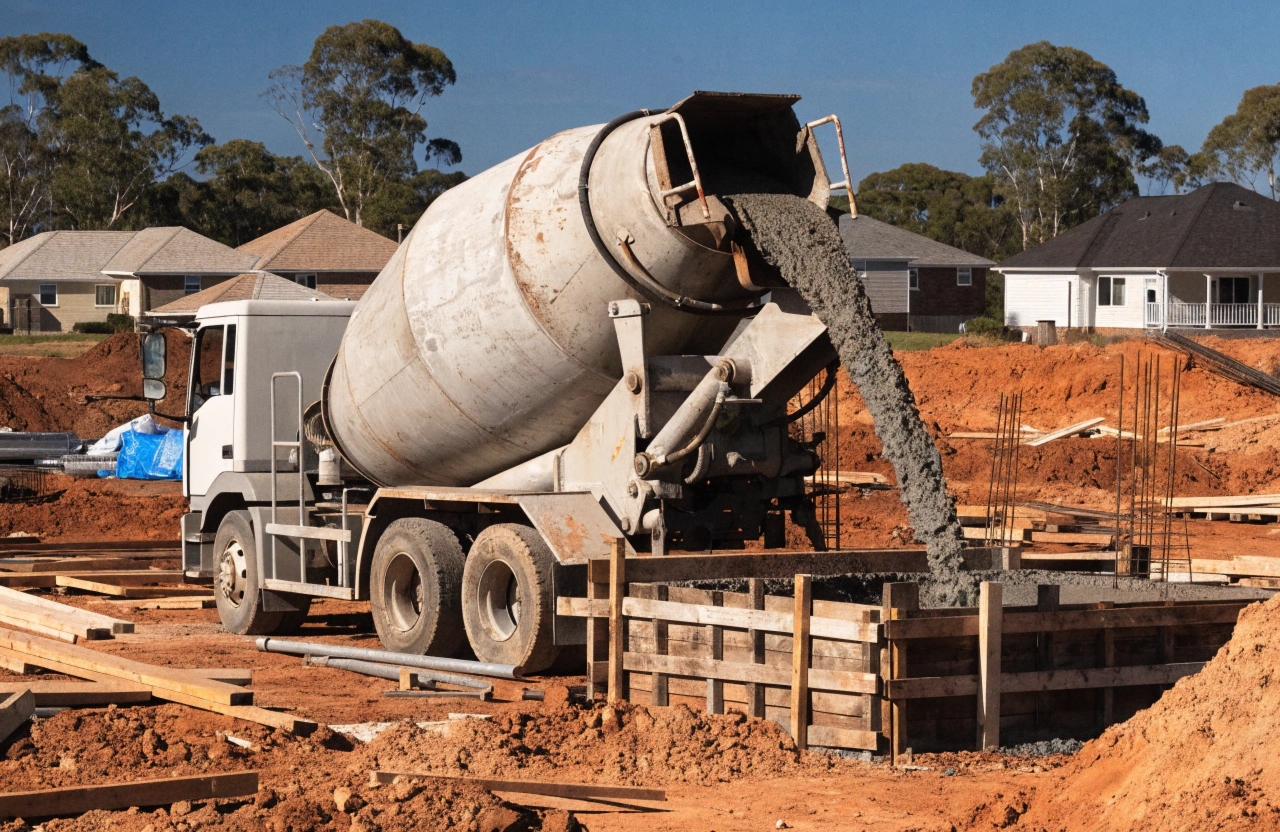
The formwork defines the shape and edge of the slab. It gets set to the correct level and checked before the pour starts. Concrete is ordered to the specified MPa strength and poured in one continuous operation where possible. The surface is finished to the required level and grade.
Curing
The slab needs time to cure before building work continues above it. We'll walk you through the timeline before the job starts so there are no surprises.
Concrete Foundation Work Across Toowoomba and the Darling Downs
We’re based in Toowoomba and we work across the region — from the city suburbs out to the surrounding towns and rural properties on the Darling Downs. Foundation jobs don’t always happen in neat suburban blocks, and we’re set up to handle projects wherever they sit on the map.
In Toowoomba itself, we work across all suburbs — east side, west side, and everything in between. Rangeville, Harristown, Glenvale, Newtown, Wilsonton, Middle Ridge, Highfields — residential and commercial foundation work across the full spread of the city.
Beyond Toowoomba, we regularly work out toward Oakey, Pittsworth, Dalby, and surrounding rural areas. Acreage builds, rural sheds, farm infrastructure, and commercial developments out on the Downs all need the same quality of foundation work as any suburban project — sometimes more, given the variability of soil conditions across rural blocks.
If your project is somewhere on the Darling Downs and you’re not sure whether we cover your area, just call and ask. More often than not the answer is yes. We’d rather you check than assume we don’t get out that far.
Every job we take on — whether it’s a suburban home slab in Harristown or a commercial foundation out past Oakey — gets the same process and the same standard of work. The location changes. The approach doesn’t.
Common Questions About Concrete Foundations in Toowoomba (FAQs)
In most cases, yes. New home foundations and extensions generally require a building approval through the Toowoomba Regional Council before work starts. The approval process involves submitting your engineering plans and having them assessed against the relevant building codes. Owner builders have their own set of requirements on top of this. If you’re not sure where your project sits, your builder, draftsperson, or engineer will be able to point you in the right direction before you get to the foundation stage.
A concrete slab needs a minimum of seven days before significant load is placed on it, and in most cases, builders are looking at 28 days for the concrete to reach its full specified strength. The curing timeline can be affected by weather — hot, dry conditions in a Toowoomba summer can speed up surface drying while actually weakening the slab if it’s not managed correctly. We take curing seriously on every pour.
A large portion of the Darling Downs sits on reactive clay soils that expand and contract with changes in moisture. This directly affects how deep a foundation needs to go and how it needs to be reinforced. A soil report is typically required as part of the engineering process — it gives the engineer the data they need to design a foundation that accounts for the actual ground conditions on your specific block, not just a generic assumption.
A slab-on-ground is poured directly onto a prepared and compacted base. A waffle pod foundation uses polystyrene void formers arranged in a grid pattern underneath the slab, which reduces the amount of concrete needed while maintaining structural performance. On reactive clay sites, waffle pods are commonly specified by engineers across Toowoomba because they handle ground movement better than a standard flat slab.
We work directly from your structural engineering plans — that’s exactly how every job gets priced and executed. If you don’t have an engineer yet, we can point you toward local engineers who work regularly on Toowoomba residential and commercial projects. Having the plans sorted before you call us makes the quoting process a lot faster and means there are no surprises once work starts on site.
Get a Free Quote on Your Toowoomba Foundation Project
If you’ve got a build coming up and you need a concrete foundation done properly, the next step is simple — get in touch and we’ll work through the details with you.
Whether you’re a homeowner planning a new build, an owner builder coordinating your own project, or a construction team looking for a reliable concreter to handle the foundation stage, we’re set up to help. We work across Toowoomba and the wider Darling Downs region, and we handle everything from single residential slabs through to larger commercial foundation pours.
Here’s what happens when you reach out:
• We talk through your project — what you’re building, where it’s located, and where you’re at with your engineering plans and approvals
• We give you a clear quote — based on the actual scope of work, not a ballpark figure that changes once we’re on site
• We lock in a start date — and we show up when we say we will
There are no hidden costs and no pressure. If you’re still in the early planning stages and you just want to understand what’s involved, that’s fine too. A quick conversation now can save a lot of headaches later.
Foundation work is the part of any build that everything else depends on. Getting it right from the start is always worth it.
Call us today or fill in the contact form to get your free quote. We’ll get back to you promptly and get your Toowoomba foundation project moving in the right direction.
