
Concrete Retaining Walls in Toowoomba Built Strong to Last
Concrete Retaining Walls
Concrete is the strongest and most practical material for a retaining wall on a Toowoomba property. Timber rots — especially in Queensland’s wet seasons — and once the rot sets in, the wall loses its structural integrity fast. Steel can rust over time when exposed to moisture in the soil. Concrete does neither. It handles the heat, the rain, and the soil pressure that comes with a Darling Downs block without breaking down or deteriorating the way other materials do. A concrete retaining wall built on a properly prepared base with the right reinforcement and drainage will hold its position for decades with minimal maintenance required.
For homeowners who want a wall they can build once and forget about, reinforced concrete is the clear choice. It outlasts the alternatives and holds its strength through every season Toowoomba throws at it.
Boundary Retaining Walls for Toowoomba Properties
Where two neighbouring properties sit at different ground levels, a boundary retaining wall does two jobs at once — it holds the higher ground in place and defines the property line cleanly. Without a wall in place, soil from the elevated block gradually pushes onto the lower property, damaging gardens, paving, and sometimes structures. A properly built concrete boundary retaining wall stops that movement at the source.
Toowoomba’s varied terrain means boundary level differences are common across established suburbs and newer developments alike. We assess the height difference, the soil conditions, and the load the wall needs to carry before any work begins. The wall is then reinforced and drained correctly so it holds its position without placing pressure on fences or neighbouring structures.
Where a boundary retaining wall sits on or near a property line, we advise on the relevant Toowoomba Regional Council requirements before construction starts so the build is compliant from day one. Getting that right at the beginning avoids disputes and delays down the track.
Where We Build Concrete Retaining Walls Across Toowoomba and the Darling Downs
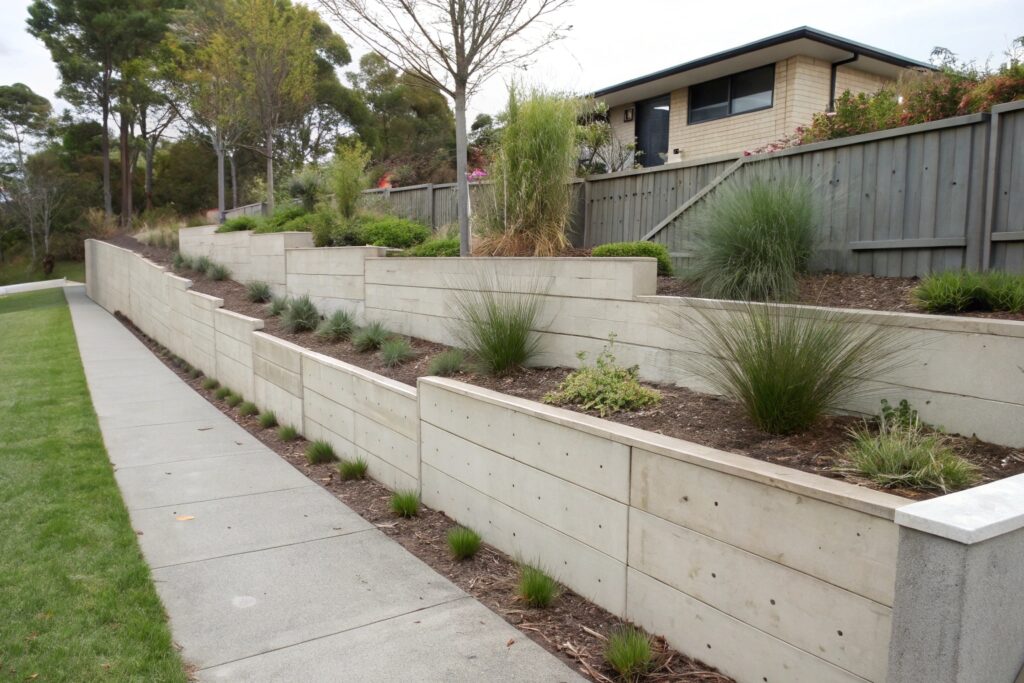
Garden Terracing with Concrete Retaining Walls
Multi-level yards across Toowoomba can be transformed into functional outdoor spaces using concrete garden terracing. Rather than losing usable area to a steep slope, we build a series of stepped retaining walls that create flat tiers for lawns, garden beds, or entertaining areas. Each tier holds its own section of soil securely, giving you a yard that works with the land rather than against it.
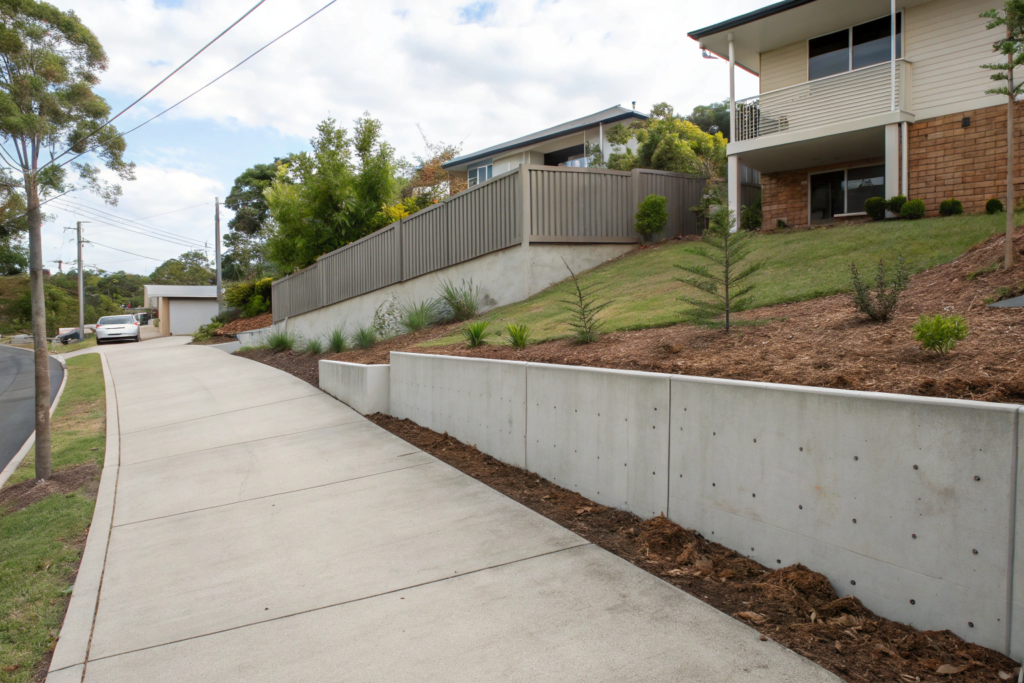
Retaining Walls Along Driveways and Access Ways
Soil movement alongside a driveway causes cracking, undermining, and eventual collapse of the surface above it. A concrete retaining wall along the driveway edge holds that soil in place and protects the base of the driveway from shifting. We build these walls to handle both the soil load and the additional pressure that comes from vehicle traffic running alongside them.
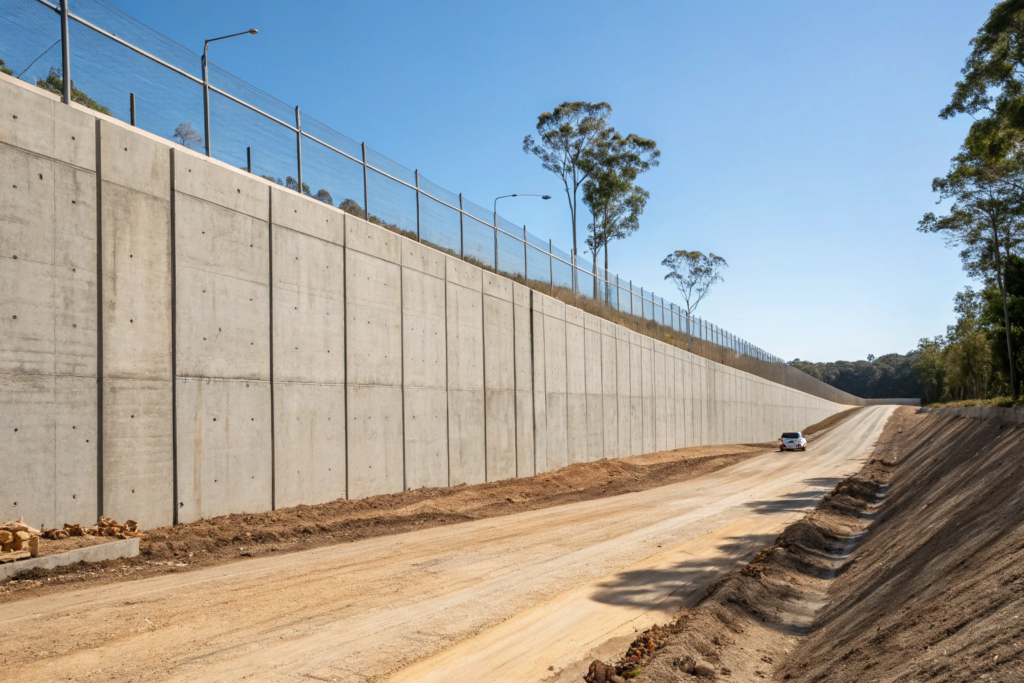
Commercial Retaining Walls Across the Darling Downs
We build commercial concrete retaining walls for developers, industrial sites, and commercial properties across the Darling Downs. Larger projects require walls engineered to handle greater soil loads, and we work with the right specifications to deliver them on time and to standard. From car park levelling to large-scale site preparation, our commercial retaining wall builds are built for the long run.
Concrete Retaining Walls for Sloped Backyards in Toowoomba
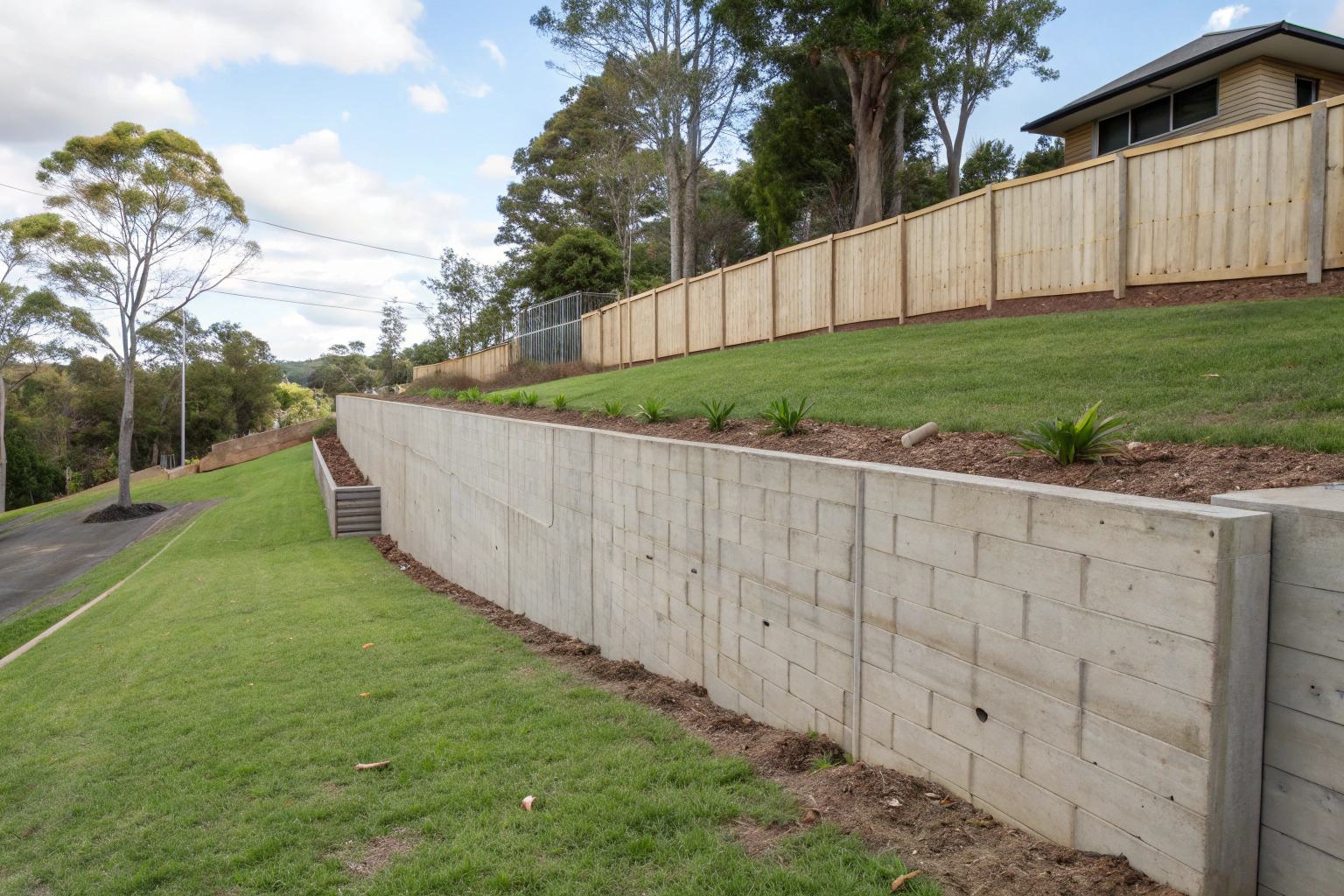
A sloped backyard limits what you can do with your outdoor space. Furniture sits unevenly, water runs straight down the yard after rain, and large sections of the block become too steep to use comfortably. A concrete retaining wall changes that by cutting into the slope and holding back the soil behind it, creating flat usable areas where there were none before.
Toowoomba blocks vary considerably in gradient, particularly across older suburbs where the natural contour of the land was left largely intact during development. We assess each site individually — measuring the slope, checking soil conditions, and determining how much pressure the wall needs to handle before we design the build.
The result is a backyard that works. Flat lawn areas, usable entertaining space, and a yard that drains properly rather than washing out after every downpour. A well-built retaining wall gives a sloped Toowoomba block genuine liveability.
Reinforced Concrete Retaining Walls vs Timber and Steel
| Reinforced Concrete | Timber and Steel |
|---|---|
| Reinforced concrete is the strongest option for a retaining wall on a Toowoomba property. It does not rot, rust, or degrade with moisture exposure, and it handles soil pressure across decades without losing structural integrity. Built correctly with steel reinforcement and proper drainage, a concrete retaining wall requires minimal ongoing attention and will outlast the property improvements built around it. | Timber retaining walls are cheaper upfront but carry a short lifespan in Queensland conditions. The moisture in the soil accelerates rot, and once the timber softens the wall loses its holding capacity fast. Steel performs better than timber but is still vulnerable to corrosion when exposed to wet soil over time. Both materials typically need replacing well before a reinforced concrete wall of the same age would require any attention. |
Built Right From the Ground Up
Site Inspection and Excavation
Every retaining wall build starts with a thorough site inspection. We assess the slope, the soil type, and the load the wall needs to handle before a single mark is made. Excavation then establishes the correct depth for the footing — the foundation the entire wall sits on. Getting this stage right determines how the wall performs for everything that follows.
Formwork, Steel and the Concrete Pour
Once the base is prepared, we set up the formwork that gives the wall its shape and install the steel reinforcement inside it. The reinforcing steel is what gives a concrete retaining wall its tensile strength — its ability to resist the lateral pressure of the soil pushing against it. The concrete is then poured and allowed to cure fully before formwork is removed.
Backfilling and Drainage Behind the Wall
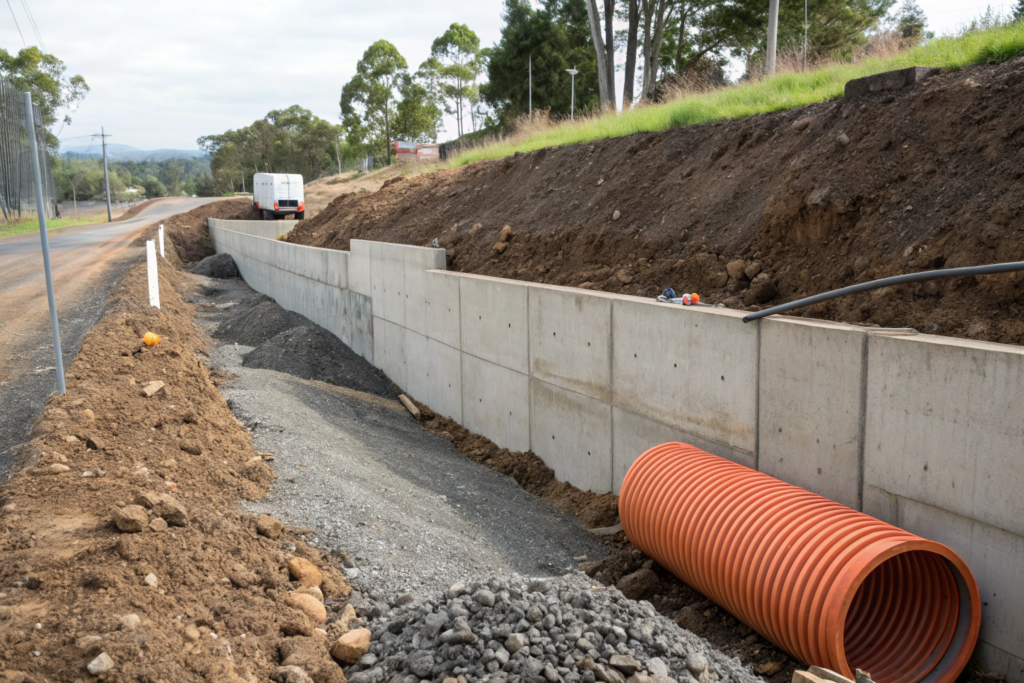
With the wall cured, agricultural drainage pipe and free-draining gravel are laid directly behind it before backfilling begins. This layer intercepts groundwater before it can saturate the retained soil and build pressure against the wall. Backfill is then compacted in stages to avoid placing sudden load on the freshly built structure.
Why Drainage Behind a Retaining Wall Matters
A concrete retaining wall is only as good as the drainage sitting behind it. When water builds up in the soil behind a wall and has nowhere to go, it creates hydrostatic pressure — a force that pushes directly against the wall from the inside. Over time that pressure cracks the concrete, causes the wall to lean forward, and eventually leads to failure. The wall itself may be structurally sound, but without proper drainage it will not last.
We install agricultural drainage pipe and free-draining backfill behind every retaining wall we build. This channels water away from the wall before pressure can build up, keeping the soil load manageable and the wall stable through Toowoomba’s wet season rainfall.
Drainage behind a retaining wall is not optional — it is the part of the job that determines how long the wall actually lasts.
Signs Your Existing Retaining Wall Needs to Be Replaced
Retaining walls do not fail overnight. The warning signs appear gradually, and catching them early is the difference between a straightforward replacement and a much larger repair job after a collapse.
Visible signs a retaining wall is failing include:
- Leaning or bowing forward away from the soil it is holding
- Horizontal or diagonal cracking across the face of the wall
- Soil appearing at the base or pushing through gaps in the wall
- Water weeping through the wall face rather than draining away correctly
- The wall separating from an adjoining fence or structure
Any one of these points to a wall that is under stress and losing its ability to hold. A concrete retaining wall in Toowoomba that shows multiple signs needs to be assessed and replaced before the soil behind it moves.
Preventing Soil Erosion on Steep Toowoomba Blocks
Steep blocks across Toowoomba lose soil faster than most property owners realise. Every heavy downpour moves material from the high side of the block down toward the boundary, the driveway, or the house itself. Over time that erosion undermines gardens, destabilises paths and paved areas, and leaves the block progressively harder to manage. On the steepest sites it creates a genuine risk of a larger soil movement during the extended wet periods the Darling Downs regularly sees.
A concrete retaining wall stops that process by holding the soil mass in place at the point where movement starts. Rather than allowing rain to carry material gradually downhill, the wall intercepts it and keeps the block intact. Combined with correct drainage behind the wall, it also manages the water itself — directing it away from the soil face rather than letting it saturate the ground and add weight to an already unstable slope.
We have built erosion control retaining walls across steep residential blocks throughout Toowoomba, Harristown, Rangeville, Glenvale, and surrounding Darling Downs suburbs. Each build is assessed for the specific gradient and soil type on site before construction begins.
Frequently Asked Questions — Concrete Retaining Walls Toowoomba
Toowoomba, retaining walls over one metre in height generally require a building permit through Toowoomba Regional Council. Walls under one metre typically do not, but boundary proximity and site conditions can affect this requirement.
Walls exceeding one metre in height, or those carrying additional loads such as a driveway or structure above them, generally require engineering design. We advise on engineer requirements during the site assessment before any work begins.
A correctly built reinforced concrete retaining wall with proper drainage behind it will last for several decades. Concrete does not rot or rust, and when constructed to the right specification it requires very little ongoing maintenance.
Poor drainage is the most common cause of retaining wall failure. When water builds up behind the wall and creates hydrostatic pressure, it pushes the wall forward over time until cracking, leaning, or full collapse occurs.
Yes, but boundary retaining walls require careful handling of council requirements and neighbour notifications in some situations. We assess the relevant Toowoomba Regional Council conditions before construction begins to keep the build compliant.
Get a Free Quote on Your Toowoomba Retaining Wall Project
Whether you are managing a sloped backyard, dealing with soil erosion, or need a boundary wall built to last, we are ready to help. We build concrete retaining walls across Toowoomba and the Darling Downs for residential and commercial properties — every build assessed, reinforced, and drained correctly from the ground up.
Getting started is straightforward. Contact us today for a free quote on your retaining wall project. We will assess your site, talk through your options, and give you a clear price with no obligation. Call us or fill in the contact form and one of our team will be in touch to get your Toowoomba retaining wall project moving.
