
Concrete Footings in Toowoomba Poured to Engineering Specs
Concrete Footings
Concrete footings in Toowoomba are what we do, and we do them properly — dug to the right depth, reinforced to spec, and poured to the concrete strength called out in your engineering plans. We work across Toowoomba and the broader Darling Downs region, handling footing installations for homeowners, owner builders, and commercial construction teams who need a solid base before building work can begin above ground.
A footing is the part of a structure that sits in the ground and carries the full weight of everything built above it. Get it wrong and the consequences work their way up through every wall, beam, and slab that follows. We make sure that does not happen — every footing we pour is level, square, and built to the engineering specifications for your specific project and site conditions.
What Makes a Concrete Footing Structurally Sound
A structurally sound concrete footing comes down to four things done correctly — depth, steel, concrete strength, and accuracy. Each one depends on the other, and cutting corners on any of them creates problems that show up later in the structure above.
Depth is determined by the soil conditions on your specific site and the load the footing needs to carry. In Toowoomba and across the Darling Downs, soil types vary considerably, and the footing depth specified in your engineering plans reflects those conditions. We dig to that depth every time.
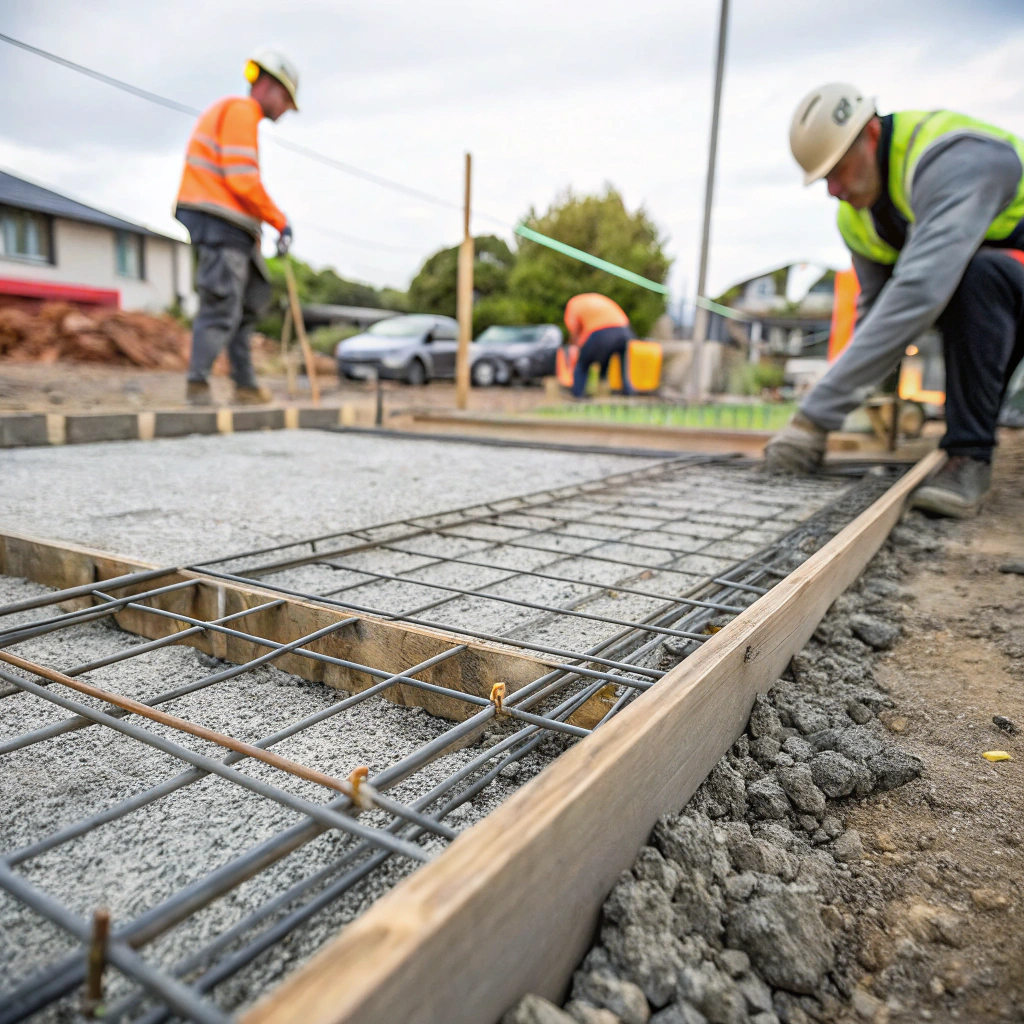
Steel reinforcement is placed to the configuration shown in the engineering drawings — the right bar size, the right spacing, and the right cover from the edge of the concrete. Concrete strength is poured to the grade specified, not whatever happens to be available.
Accuracy matters throughout. A footing that is off level or out of square creates alignment problems for every trade that follows. We check and recheck before the concrete goes in.
Concrete Footing Types We Handle in Toowoomba
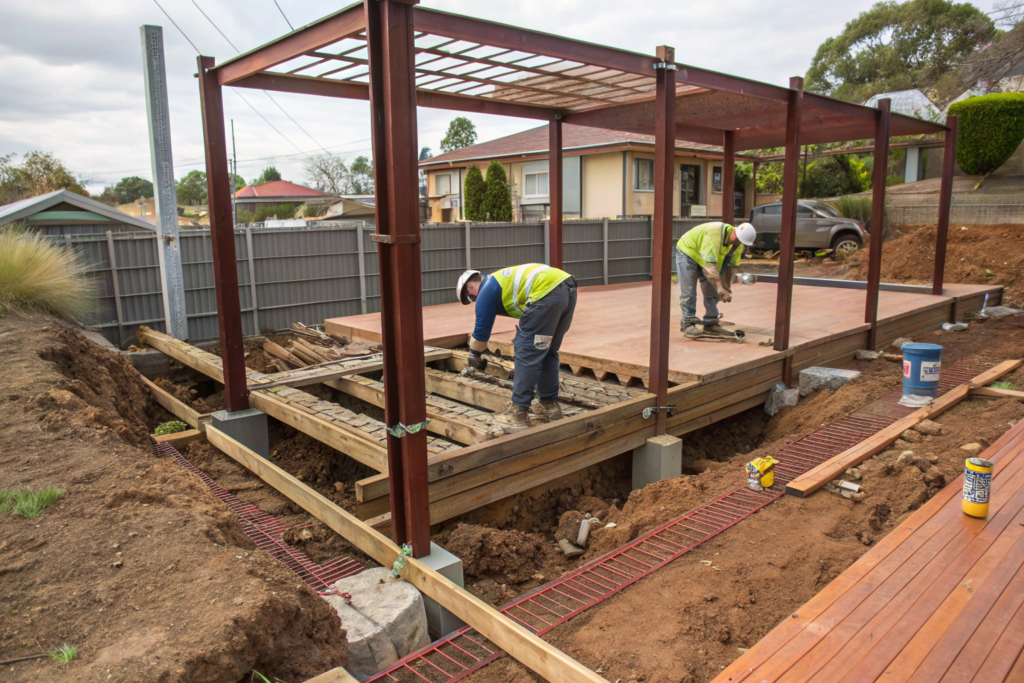
Deck and Pergola Footings Toowoomba
Deck and pergola footings need to be sized and positioned correctly for the structure they are carrying. We dig to the specified depth, place the steel, and pour to the engineering requirements so your posts sit on a footing that will not shift or settle over time. We handle both pad footings and pier footings depending on what your plans call for.
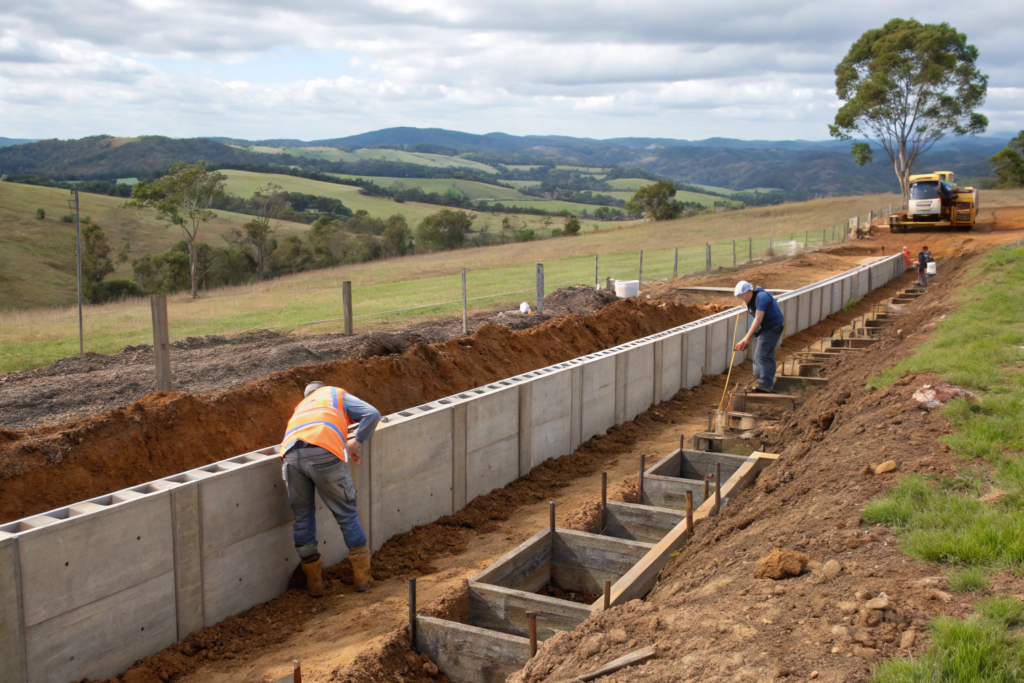
Retaining Wall Footings on Darling Downs Properties
Retaining wall footings carry both the weight of the wall and the lateral pressure of the soil behind it. Getting the depth and width right for those combined loads is what separates a wall that holds from one that moves. We pour retaining wall footings across Toowoomba and the Darling Downs to the engineering specifications for your specific site and soil conditions.
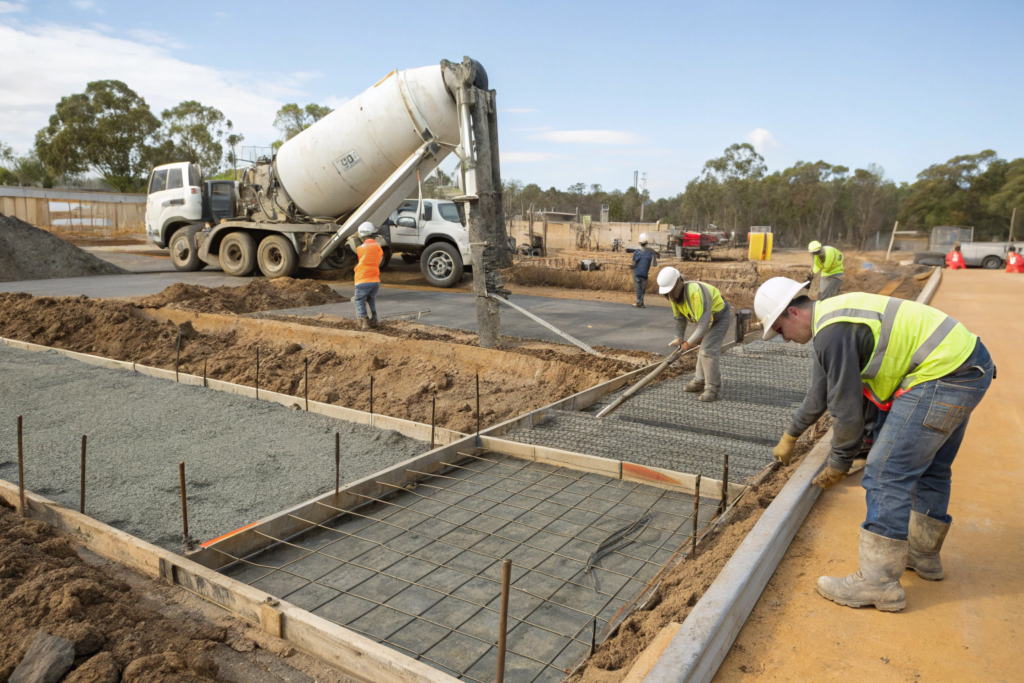
Commercial Concrete Footings Toowoomba
Commercial footings carry heavier loads and are held to tighter tolerances than most residential work. We work directly from your engineering drawings, coordinate with your construction programme, and pour footings that meet the structural requirements for commercial buildings, industrial structures, and multi-unit developments across Toowoomba and surrounding areas.
Working to Engineering Specs on Every Pour
Every concrete footing we pour is built to the engineering specifications for that specific project. We do not make judgement calls on depth, steel configuration, or concrete strength — those decisions are made by the engineer, documented in the plans, and our job is to execute them accurately on site.
Before any concrete goes in we review the drawings, confirm the footing dimensions, check the steel placement against the specification, and make sure the depth is correct for the soil conditions on that particular site. If something on site does not match what the plans anticipated, we raise it before pouring, not after.
Working to engineering specs protects the homeowner, the owner builder, and the construction team. It means the footing inspection goes smoothly, the structure above is built on a base that meets the required standard, and there are no costly issues to resolve further down the track.
Strip Footings vs Pad Footings — Which Does Your Project Need
| Strip Footings | Pad Footings |
|---|---|
| Strip footings run continuously along the line of a wall, distributing the load of the structure evenly across the length of the footing. They are commonly used in home builds, extensions, and brick or block wall construction where the load is spread along a linear path. The width and depth of a strip footing are determined by the wall load above and the bearing capacity of the soil below. | Pad footings are isolated concrete pads used to carry point loads from posts and columns. They are the standard footing type for decks, pergolas, carports, and steel or timber framed structures where the load comes down through individual posts rather than a continuous wall. The size and depth of each pad are specified by the engineer based on the post load and the soil conditions on your specific site. |
How We Approach Every Concrete Footing Job From Start to Finish
Reviewing the Plans and Marking Out the Site
Before any digging starts we review the engineering drawings in full — footing dimensions, depths, steel specifications, and concrete grade. Once we have a clear picture of what the plans require we mark out the footing positions on site, checking setbacks and alignments against the drawings. Getting the layout right at this stage means everything that follows goes in the correct position first time.
Excavation, Steel Placement, and Formwork
We excavate to the depth specified in the engineering plans, prepare the base, and place the steel reinforcement to the configuration shown in the drawings — correct bar size, correct spacing, correct cover. Where formwork is needed to contain the pour we set it up accurately and check it is level and square before the concrete is ordered. Nothing goes in until everything checks out.
Pouring the Concrete and Allowing It to Cure
We pour to the concrete strength specified in the engineering plans and finish the surface to the level required for the structure above. Once the pour is complete the concrete needs adequate curing time before building work continues — the timeframe depends on the concrete grade, the weather conditions, and what is being built above. We advise on this clearly so your construction programme is not held up unnecessarily.
What Concrete Strength Is Used for Footings in Toowoomba
Concrete strength for footings is measured in megapascals and specified by the engineer on your project — it is not a decision we make on site. The most common strength used for residential footings in Toowoomba is 25 MPa, which provides the load-bearing capacity required for standard home builds, extensions, and most domestic structures. Heavier or more complex projects may call for 32 MPa or higher, particularly on commercial builds or where soil conditions place additional demand on the footing.
The concrete strength specified in your engineering plans is there for a reason — it reflects the loads the footing needs to carry and the conditions it will sit in. We order to that specification on every job and do not substitute a lower grade to cut costs or because a particular mix is more readily available. What the engineer specifies is what goes in the ground.
Footing Failures — What Causes Them and How We Prevent Them
Footing failures do not happen randomly — they have identifiable causes, and most of them come back to shortcuts taken during installation. Inadequate excavation depth, undersized or incorrectly placed steel reinforcement, concrete poured to a lower strength than specified, and footings that are out of level or out of square are the most common contributors to structural problems that show up later above ground.
Expansive clay soils across the Darling Downs add another layer of complexity. Footings that are not designed and poured to account for soil movement in this region are at greater risk of shifting as the ground swells and contracts through wet and dry cycles.
We prevent footing failures by doing the basics correctly on every job — digging to the right depth, placing steel to spec, pouring the correct concrete grade, and checking accuracy throughout. No shortcuts, no substitutions, and no concrete goes in until the setup is right.
Footing Inspections — What to Expect Before the Pour
Most concrete footing work in Toowoomba requires a inspection before the concrete is poured. This gives the building certifier or private certifier the opportunity to confirm the footing is excavated, reinforced, and set up correctly before it is locked in permanently by the pour.
What gets checked at a footing inspection:
- Excavation depth and width against the engineering drawings
- Steel reinforcement — bar size, spacing, and lap lengths
- Concrete cover — the distance between the steel and the edge of the footing
- Formwork alignment, level, and stability where applicable
- Setbacks from boundaries and other structures
What we do to make sure your inspection passes first time:
- We review the engineering plans thoroughly before work begins
- We check our own work against the drawings before calling for the inspection
- We have the engineering documents on site and available for the certifier
- We do not book the inspection until everything is ready
Passing the inspection first time keeps your construction programme on track. We have the process down and know exactly what certifiers are looking for before they arrive on site.
Frequently Asked Questions About Concrete Footings in Toowoomba
A concrete footing is the structural element that sits in the ground and carries the load of everything built above it. It transfers that weight into the soil and gives the structure a stable base to build from.
Footing depth depends on the soil conditions on your site and the load the footing needs to carry. In Toowoomba, expansive clay soils often require greater depth than other regions. Your engineer specifies the correct depth for your project.
The most common concrete strength for residential footings in Toowoomba is 25 MPa. Heavier or more complex projects may require 32 MPa or higher. The strength used on your job is always what your engineer has specified in the plans.
Concrete footings generally need a minimum of seven days before significant loads are applied above, though the full cure period depends on the concrete grade, weather conditions, and what is being built. Your engineer or certifier can confirm the requirement for your project.
Expansive clay soils in the Darling Downs shrink and swell with changes in moisture. This movement places additional stress on footings, which is why footing depth, width, and steel reinforcement in this region are designed specifically to account for soil behaviour.
Get a Free Quote on Your Toowoomba Concrete Footing Project
We provide free quotes on concrete footing work across Toowoomba and the Darling Downs. Whether you are a homeowner planning an extension, an owner builder managing your own build, or a construction team that needs a reliable contractor for footing installations, we are ready to price your job accurately and get it scheduled.
To get a quote, have your engineering plans or site details ready and get in touch with our team. We will review what your project requires, ask the right questions about your site and timeline, and come back to you with a clear, itemised price.
Call us today or fill in the contact form to request your free quote on concrete footings in Toowoomba. We are ready to get started.
