
You’ve finally decided to fix that cracked driveway that’s been bothering you for months. Or maybe you’re dreaming about that outdoor entertainment area perfect for those Queensland summer BBQs. But here’s the thing that’s probably keeping you awake at night – how long is your property gonna be a construction zone?
Last week, I was chatting with my neighbor Steve over the fence. He’d just finished his new concrete patio, and he said something that stuck with me: “Mate, I wish someone had told me it wasn’t just about the pour day. There’s so much more to the timeline than I thought.”

He’s right. The concrete installation duration in Harristown isn’t just a simple three-day job like some contractors might suggest. Between our unpredictable afternoon storms, that notorious black soil we’re dealing with, and the council approval dance, there’s a lot more to consider when you’re planning concrete work on your property.
Whether you’re looking at upgrading your driveway before the Christmas rush, installing that pool deck you’ve been promising the kids, or sorting out commercial concrete repairs before the wet season hits, getting a realistic timeline is half the battle. And let’s be honest – nobody wants their daily routine turned upside down longer than necessary.
In this guide, we’re gonna break down exactly what you can expect for every type of concrete project common around Harristown. We’ll look at how our local weather patterns and soil conditions affect your schedule, and I’ll share some insider tips from contractors who’ve been working these streets for decades. By the end, you’ll know exactly how to plan your project without those nasty surprises that catch so many property owners off guard.
How Long Does Concrete Installation Actually Take in Harristown?
Here’s the straight answer most property owners in Harristown are looking for:
Typical Concrete Installation Timelines in Harristown:
- Residential Driveway: 3-5 days total (1 day prep, 1 day pour, 2-3 days initial cure)
- Concrete Patio: 2-4 days (smaller area, simpler preparation)
- Pool Deck: 5-7 days (requires specialized finishing)
- Garage Slab: 4-6 days (includes vapor barriers and reinforcement)
- Commercial Parking Lot: 7-14 days (larger scale, striping required)
- Decorative/Stamped Concrete: Add 2-3 days to base timeline
- Full Cure Time: 28 days for maximum strength
Keep in mind, Harristown’s weather can stretch these timelines by 20-30% during our wet season from November through March. Most experienced contractors around here automatically build in 2-3 buffer days just for those afternoon storms that roll in outta nowhere.
Understanding Concrete Installation Phases in Harristown
Pre-Installation Planning (1-2 weeks before)
Before anyone shows up with a concrete truck, there’s groundwork that needs doing. And I’m not talking about the actual ground yet – that comes later.
First up, you’re looking at council approval through Toowoomba Regional. Depending on what you’re building and where your property sits, this can take anywhere from a few days to two weeks. Simple driveways? Usually pretty quick. But if you’re doing anything near property boundaries or changing drainage patterns, buckle up for a longer wait.
Then there’s the dial-before-you-dig dance. Getting utilities marked takes about 48 hours after you lodge the request. Trust me, you don’t wanna be the person who hits a gas line because they thought they could eyeball it.
Material ordering is where things get interesting. Most suppliers around Harristown keep standard concrete mixes in stock, but if you’re after something specific – colored concrete, special aggregates, or high-strength mixes – you might be waiting a week or more.
Site Preparation Phase (Day 1-2)
This is when things start happening on your property. The crew shows up, and suddenly your quiet yard turns into a hive of activity.
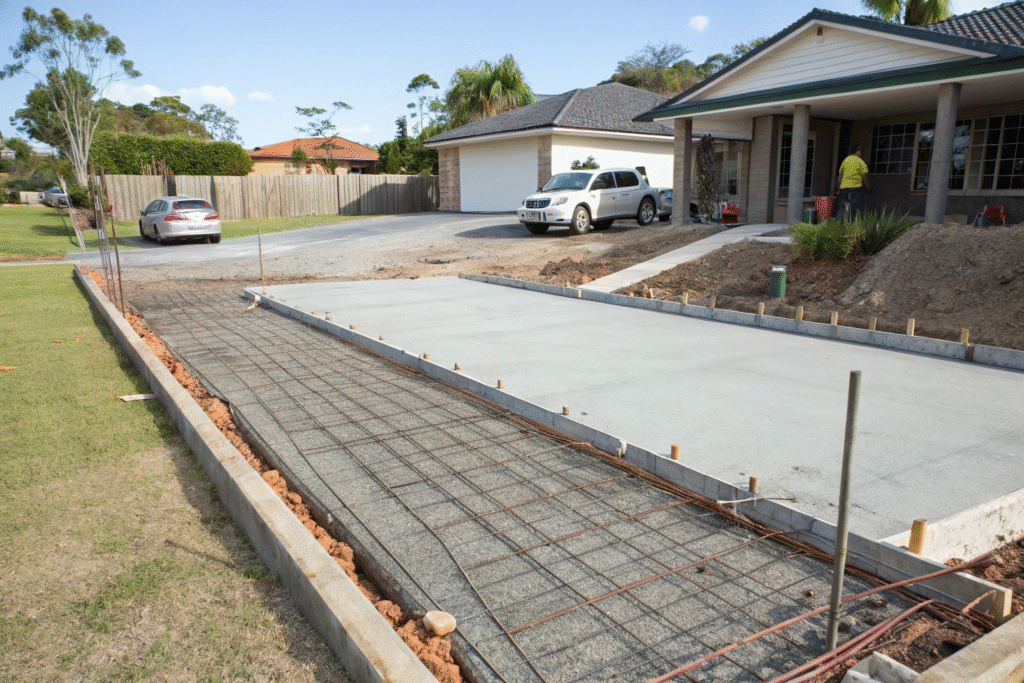
Day one is all about excavation and getting levels right. In Harristown, we’re dealing with that reactive black soil that moves more than a teenager trying to get comfortable on the couch. Your contractor needs to dig down past the reactive layer – usually means going deeper than you’d expect. We’re talking 300-400mm for driveways, sometimes more if you’ve got real problem soil.
The base preparation is critical here in Queensland. It’s not just throwing down some gravel and calling it good. We need proper compaction, the right aggregate size, and sometimes even stabilization treatments if the soil’s particularly dodgy. This takes time – rushing it is asking for cracks down the track.
Formwork goes up on day two, usually. These are the timber or metal borders that keep your concrete where it should be. For a simple rectangle driveway, it’s straightforward. But if you’ve got curves, slopes, or fancy designs, the formwork alone can take a full day.

Concrete Pour Day (Day 3)
Pour day is where the magic happens, and timing is everything in Queensland. Most crews start early – we’re talking 6 AM early – to beat the heat. Concrete and 35-degree afternoons don’t mix well, literally.
The size of the crew makes a difference to how long this takes. A standard residential driveway with a four-person crew? They’ll have it poured and finished in half a day. But if you’ve only got two blokes on the job, you’re looking at most of the day.
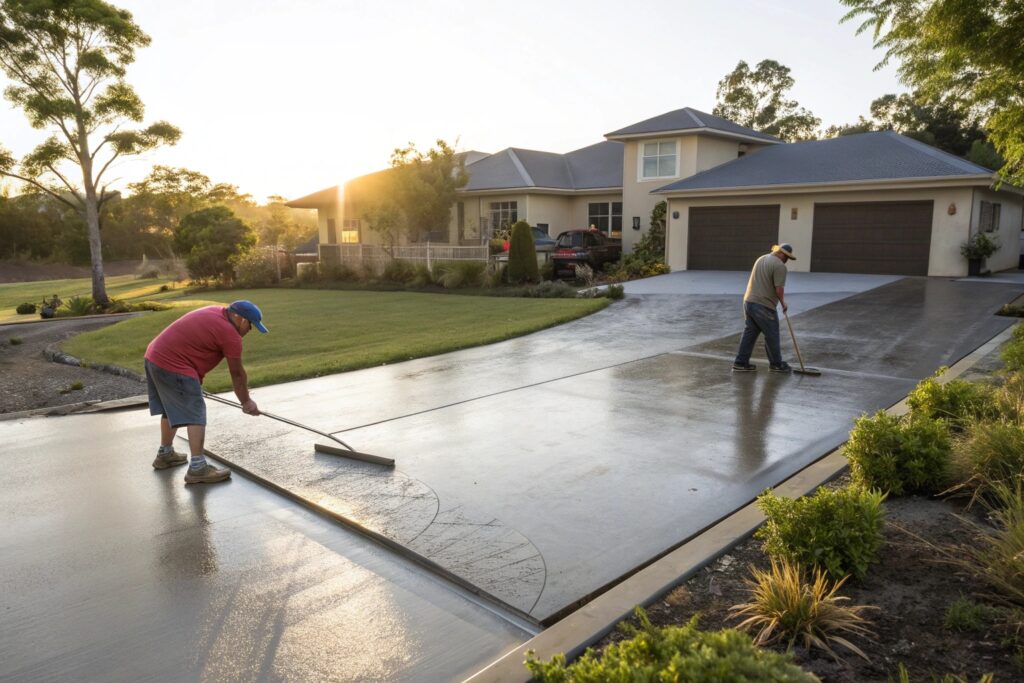
The finishing is where craftsmanship shows. Basic broom finish for traction? Pretty quick. But if you’re going for exposed aggregate or stamped patterns, that’s hours of careful work. And it all needs doing before the concrete starts setting, which happens faster in our Queensland heat.
Curing and Protection (Days 4-30)
Here’s where patience becomes your best friend. That fresh concrete might look solid after 24 hours, but it’s still fragile.
The initial set happens in the first 24-48 hours. You can usually walk on it after day two, but keep the car off. By day seven, you’re at about 70% strength – enough for light vehicle traffic on driveways. But here’s the kicker – full strength takes 28 days. That’s not contractors being overly cautious; that’s chemistry.
During this time, especially in our climate, the concrete needs protection. Too much sun? It’ll crack. Unexpected rain in the first 24 hours? That can damage the surface. Good contractors use curing compounds or covers to protect your investment.
Project-Specific Timelines for Harristown Properties
Residential Driveway Installation Timeline
Your standard single driveway – the bread and butter of concrete work around here – typically runs 3-5 days from start to “park your car on it” finish. That’s for a straightforward job without any drama.
Got a double or extended driveway? Add a couple days. It’s not just about more concrete; it’s about additional formwork, potentially more complex drainage, and definitely more finishing work. The crew can only work so fast, especially when they’re doing it right.
If you’re going fancy with decorative finishes – stamped patterns that look like pavers, colored concrete, or exposed aggregate – you’re adding time. The pour day stays roughly the same, but the finishing takes longer, and you might need an extra day for sealing once everything’s cured enough.
Outdoor Entertainment Area Timelines
That basic patio you’ve been planning? If it’s a simple slab, you’re looking at 2-4 days. Smaller area than a driveway, usually easier access, less complicated formwork.
Pool surrounds are a different beast. We’re talking 5-7 days minimum because of all the detail work. You’ve got coping to install, usually some tricky levels to match, and often special non-slip finishes that take extra time. Plus, working around an existing pool means the crew’s gotta be more careful – can’t just swing equipment around like they would in an open yard.
Thinking about an outdoor kitchen slab? Budget 4-6 days. These need to be dead level, often require plumbing and electrical conduits cast in, and sometimes need special reinforcement for the weight of built-in BBQs and stone benchtops.
Commercial Concrete Project Durations
Commercial work operates on a different scale entirely. A retail parking lot? You’re looking at 7-14 days minimum, and that’s if everything goes smooth. We’re talking about moving massive amounts of soil, laying base materials by the truckload, and coordinating multiple concrete pours.
Industrial flooring jobs run even longer – typically 10-21 days. These floors need to handle forklifts, heavy machinery, chemical spills maybe. That means special concrete mixes, often with steel fiber reinforcement, and super-flat finishes that take ages to get right.
Loading dock repairs might seem simpler at 3-5 days, but they’re complicated by the need to maintain business operations. Often means working nights or weekends, which can actually extend the calendar time even if the work hours stay the same.
Weather and Seasonal Factors Affecting Installation Duration
Queensland’s Wet Season Considerations (November-March)
Let’s talk about the elephant in the room – our wet season. From November through March, you’re gambling with the weather gods every time you schedule concrete work.
The statistics are sobering. Projects scheduled during these months face delays about 40% of the time. We’re not talking hour-long showers either; those afternoon storms can dump 50mm in an hour and wash out your whole schedule.
Smart contractors build in buffer time, but that means your 5-day project might be scheduled across 7-8 days. They’ll have tarps ready, water-proofing additives on standby, and a flexible crew who can jump on opportunities between weather events.
Summer Heat Impact (December-February)
The heat brings its own challenges. Concrete sets faster in hot weather – sounds good until you realize the crew has less time to get the finish right.
That’s why summer pours start before sunrise. By 10 AM, the sun’s already making things difficult. The concrete needs extra water for workability, but too much water weakens the final product. It’s a balancing act that experienced crews handle with additives and careful timing.
Hot weather also means extended curing precautions. That fresh concrete can literally cook in our summer sun, causing surface cracks that’ll haunt you for years. Expect to see curing blankets, regular water spraying, or chemical curing compounds – all adding steps to the process.
Optimal Installation Seasons
If you’ve got flexibility, April through October is your golden window. The weather’s more predictable, the temperatures are manageable, and contractors aren’t juggling weather delays.
But here’s the catch – everyone knows this. Good contractors get booked solid during these months. You might wait longer to start, but once they begin, the job flows smoother.
Pricing reflects this too. Expect to pay 10-15% more during peak season because contractors can pick and choose jobs. Some property owners accept longer timelines in the off-season to save money.
Factors That Can Extend Your Concrete Project Timeline

Site-Specific Challenges in Harristown
Every property has its quirks, but some have more than others. Slopes mean additional excavation and potentially retaining work. That “simple” driveway on a slope might need engineered drainage solutions that add days to your timeline.
Got existing concrete that needs removing? Add 1-2 days minimum. That old stuff’s often tougher than expected, especially if it was done properly with reinforcement. Plus, disposal isn’t just loading a truck – concrete recycling facilities have rules about what they’ll accept.
Access restrictions in established neighborhoods create headaches. Can’t get a concrete truck down your narrow street? That means pump trucks or wheelbarrow brigades, turning a half-day pour into a full-day marathon.
Soil Conditions and Ground Movement
Toowoomba’s black soil is notorious among builders. This stuff expands and contracts like crazy with moisture changes. Your contractor might need to excavate an extra 200mm and bring in stable fill, adding a full day or two to preparation.
Sometimes soil testing reveals worse news – extremely reactive clay that needs chemical stabilization or even pier foundations for heavy structures. We’re talking weeks of additional work in extreme cases.
The moisture content when you start matters too. If the ground’s waterlogged from recent rain, you might need to wait for it to dry out or spend extra time installing drainage. Either way, your timeline takes a hit.
Design Complexity Factors
Want that driveway to look like European cobblestones? Beautiful choice, but stamped patterns add significant time. The crew needs to work in sections, applying patterns while the concrete’s at exactly the right consistency.
Multiple colors mean multiple pours or careful sectioning work. Each color boundary needs special attention, and mistakes are costly to fix.
Integrated features really slow things down. Drainage grates, garden bed borders, lighting conduits – each one needs precise placement and often holds up other work. That decorative border might only add a few hours of actual work, but it can push your whole schedule back a day.
How to Minimize Delays and Disruption
Pre-Project Planning Checklist
Getting your ducks in a row before starting saves headaches later. Council approval isn’t just paperwork – it’s measuring setbacks, checking easements, confirming your plans meet local codes. Start this process at least three weeks before you want work to begin.
Your neighbors deserve a heads-up, and not just to be nice. Queensland law requires notification for some work, and angry neighbors can make council complaints that stop your project cold. A friendly chat and a timeline explanation goes a long way.
Utility marking seems like a formality until someone hits a service line. Lodge your Dial Before You Dig request early, and make sure your contractor has the maps before they start. Nothing delays a project like waiting for emergency utility repairs.
Choosing the Right Season
Look at historical weather data, not just forecasts. April and September consistently show the least rainfall for Harristown. May through August can be perfect, though winter morning frosts occasionally delay early starts.
Contractor availability follows predictable patterns. They’re swamped in spring when everyone wants work done. Book for late autumn, and you might get better attention and possibly better pricing.
Consider your own schedule too. No point scheduling during school holidays if you need the driveway clear for coming and going. Think about when you can handle the disruption, not just when the weather’s good.
Working with Your Contractor
Ask specific timeline questions. “How long will it take?” isn’t enough. You want to know: What happens if it rains? How many buffer days are built in? What’s the plan for unexpected issues?
Red flags include contractors promising unrealistic timeframes. If everyone else says 5 days and someone promises 2, they’re either cutting corners or haven’t thought it through. Neither’s good for you.
Discuss buffer time openly. Good contractors build it in automatically, but you need to know what’s padding and what’s actual work time. This helps you plan around the disruption and sets realistic expectations.
Making Your Concrete Project Timeline Work for You
Getting your concrete project done right means understanding the real timeline, not just the best-case scenario. From my experience watching projects around Harristown, the successful ones aren’t necessarily the fastest – they’re the ones where property owners knew what to expect.
Remember that concrete installation in Harristown depends on so many factors beyond just the size of your project. Our weather, soil, and even the time of year all play their part. But armed with this knowledge, you can plan properly, choose the right contractor, and avoid the frustration that comes from unrealistic expectations.
Whether you’re looking at a simple driveway refresh or a complete outdoor entertainment area, the key is starting your planning early, building in flexibility for our Queensland weather, and working with contractors who know the local conditions. Your property’s gonna be a construction zone for a bit – but when it’s done right, that new concrete will serve you well for decades to come.
