
Concrete Slabs in Toowoomba Poured and Finished Right
There’s a slab job somewhere in Toowoomba right now that’s going to cause someone a headache in three years. Not because the concrete itself was bad — but because the base wasn’t compacted properly, or the thickness wasn’t right for what it’s carrying, or the water just sits on it after rain instead of running away. It’s one of those things you don’t think about until you’re dealing with cracks across your new shed floor or a garage slab that’s starting to move.
We pour concrete slabs across Toowoomba and the Darling Downs for all kinds of jobs — house slabs, garage and shed floors, patios, pool surrounds, and general outdoor areas. Doesn’t matter if it’s a small backyard project or a full house pad for a new build. Every single one of them needs the same level of care in how it’s prepared, reinforced, and finished.
The Darling Downs soil isn’t forgiving. The reactive clay that runs through a lot of Toowoomba properties moves with the seasons — it swells when it’s wet and shrinks back when it dries out. A slab that’s not designed and poured with that in mind is going to reflect that movement eventually. That’s why getting it right from the start isn’t just the professional thing to do — it’s the only way to give a slab any real chance of lasting the way it should.
What Makes a Concrete Slab Last
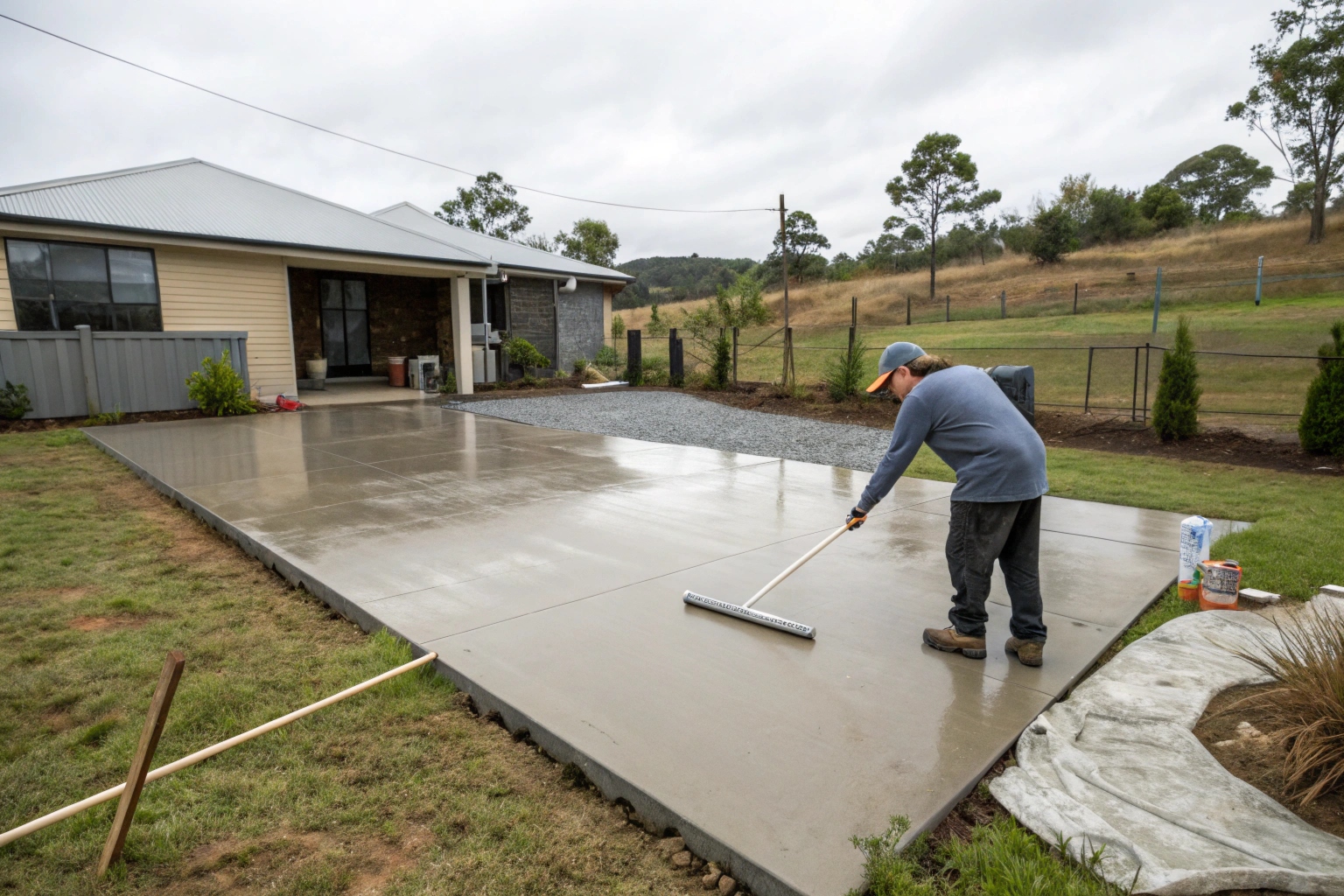
A concrete slab looks simple from the outside — it’s just a flat grey surface. But what happens underneath and during the pour is what determines whether it holds up for decades or starts showing problems within a few years.
Here’s what actually goes into a slab that lasts:
A properly prepared base The ground underneath a slab has to be compacted and stable before anything gets poured. If it’s soft, uneven, or hasn’t been graded to drain correctly, the slab above it will eventually follow. On Toowoomba’s reactive clay soils, this step matters more than most people realise.
The right thickness for the job A garden path doesn’t need the same thickness as a shed floor carrying a heavy vehicle. Getting this wrong either wastes money or creates a slab that’s not up to the load it’s carrying. We size the slab to match what it actually needs to handle.
Steel reinforcement Mesh or rebar sits inside the slab to hold it together if the ground underneath ever shifts. Without it, a crack that starts small can open up fast.
A finish that drains water properly Water pooling on a slab surface causes staining, erosion, and slipping hazards. The fall needs to be built into the finished surface from the start — you can’t fix it after the concrete goes off.
Skip any one of these steps and you’re gambling on the outcome.
Concrete Slab Types We Handle Across Toowoomba
Every slab job is a little different. Here’s what we cover and what matters for each one.
House Slabs
A house slab is the most demanding pour we do. It has to be engineered to suit the soil classification on your specific block, which in Toowoomba often means dealing with reactive clay conditions. Reinforcement, thickness, and edge beam depth are all designed around what the ground is doing underneath.
Garage Slabs
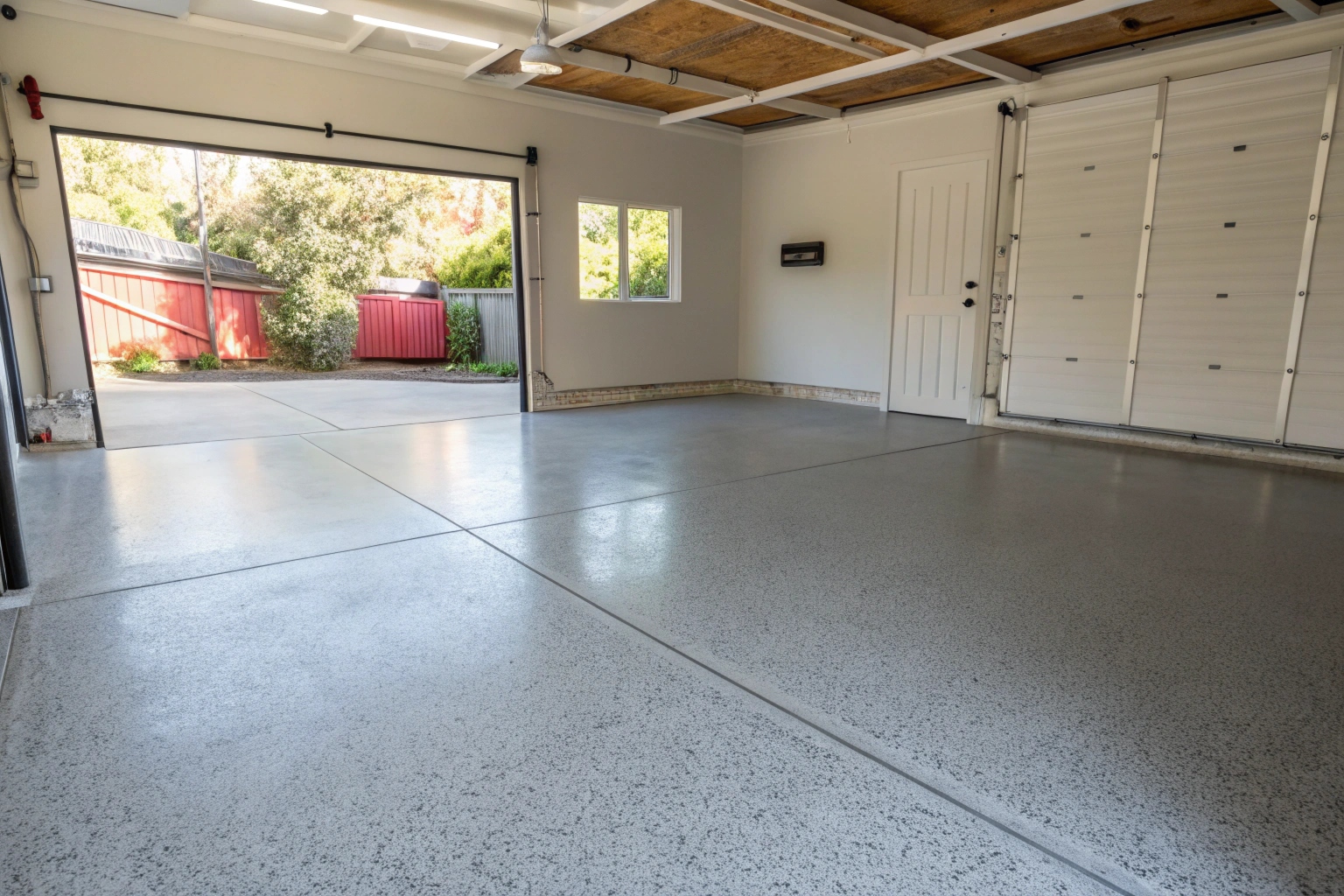
Garage floors carry vehicles, heavy storage, and years of daily traffic. We pour these with adequate thickness and reinforcement to handle the load without cracking across the surface or along the joints.
Shed Slabs
Whether it's a small garden shed or a large workshop, the slab needs to suit what's going in it. A shed carrying machinery or a car hoist needs a heavier spec than a standard storage shed. We talk through what the space is being used for before we quote.
Patio Slabs
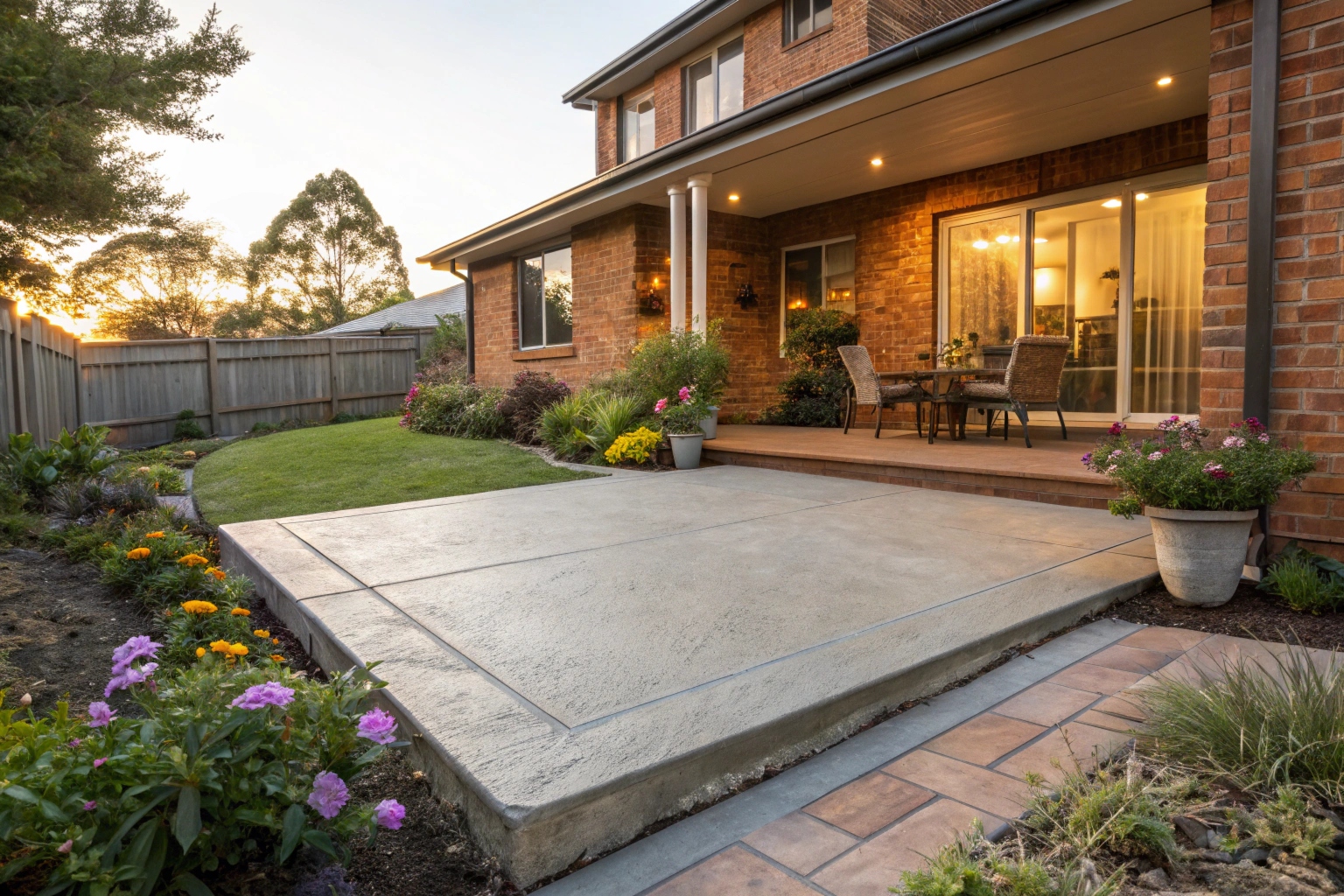
Patio slabs are visible, so the finish matters. They also need a proper fall built in so water doesn't sit against the house after rain — something that causes real problems over time on Toowoomba properties.
Pool Surrounds
Non-slip finish, accurate levels, and clean edges around the pool shell. Pool surrounds take a lot of foot traffic and constant moisture exposure, so preparation and finishing are both done with that in mind.
How We Approach Every Concrete Slab Job
No two sites are identical, but the process we follow is consistent. Here’s how a slab job runs from start to finish.
Site Inspection
Before anything gets quoted or scheduled, we look at the site. We’re checking the ground conditions, the slope, access for the concrete truck, and anything that might affect how the job gets done. Toowoomba blocks can throw up a few surprises — especially on older properties or sloping blocks in the ranges.
Ground Preparation
This is where most of the real work happens. The area gets excavated to the right depth, the base is brought in and compacted in layers, and the surface is graded so water will drain away from the finished slab correctly.
Formwork Setup
Timber formwork goes in to define the shape and edges of the slab. It also sets the finished height and fall direction. If the formwork isn’t right, the slab won’t be right — simple as that.
Steel Reinforcement
Mesh or rebar is placed and lifted off the base so it sits properly within the concrete rather than lying at the bottom where it does nothing useful.
The Pour and Finish
Concrete goes in, gets spread and screeded level, then finished to the specified texture — whether that’s a broom finish, smooth trowel, or exposed aggregate. Expansion joints are cut or placed to control where movement happens.
Curing
The slab is kept damp and protected while it cures. Rushing this step weakens the finished product. We don’t cut corners here.
Why Local Knowledge Matters for Toowoomba Slab Work
Toowoomba isn’t a generic pour-and-go market. The soil conditions across the Darling Downs vary more than people expect, and that variation has a direct impact on how a slab needs to be designed and built.
Parts of Toowoomba sit on highly reactive clay — the kind that moves significantly between wet and dry seasons. Other areas have different ground profiles depending on how close you are to the ranges, what’s been done to the block previously, and how drainage has been managed on surrounding properties over the years.
A concretor who doesn’t know this area will quote and pour based on what they’re used to doing elsewhere. That might work out fine. Or it might mean a slab that starts reflecting the ground movement underneath it within a few years.
We’ve been working across Toowoomba and the surrounding Darling Downs long enough to know which areas need extra attention at the base preparation stage, where the clay conditions are most aggressive, and how to spec a slab that’s going to hold up in this climate rather than just look good on the day it’s poured.
That local experience doesn’t show up on a quote — but it shows up in the slab ten years down the track. When someone asks us why we do things a certain way on a particular site, we can give them a straight answer based on what we’ve seen on similar blocks in the same area. That’s the difference between knowing concrete and knowing Toowoomba concrete.
Signs Your Property Needs a New Concrete Slab
Sometimes the question isn’t whether to pour a new slab — it’s recognising when an existing one has reached the end of its useful life and patching it any further is just delaying the inevitable.
Toowoomba’s reactive clay conditions are hard on concrete over the long term. A slab that’s been moving with the ground for fifteen or twenty years starts to show it in ways that are hard to ignore.
Here’s what to watch for:
Cracking that keeps coming back If you've had cracks filled before and they keep reopening — or new ones are appearing nearby — the slab is moving underneath. Surface repairs won't fix a ground movement problem.
Sections that have shifted up or down When one part of a slab sits higher or lower than the section next to it, the base underneath has settled unevenly. That's a structural issue, not a surface one.
Water pooling in the same spots after rain A slab that was poured with the right fall will drain correctly. When water consistently sits in the same spots, the slab has moved enough that the fall is working against you now.
Hollow or soft-sounding areas underfoot Tap on a slab that sounds hollow in patches and you've got voids forming underneath — usually from soil washing out over time. That slab is unsupported in those areas and won't get better on its own.
Edges that are crumbling or breaking away Edge deterioration usually means the slab was either too thin at the perimeter or moisture has been working on it for years. Once the edges go, the rest follows
If any of these sound familiar, it’s worth getting someone out to take a look before the problem gets bigger — or before you build something on top of a slab that’s not going to hold it
What Concrete Slabs Cost in Toowoomba
Concrete slab pricing isn’t one-size-fits-all, and anyone who gives you a firm number before they’ve seen the site is guessing. That said, it helps to understand what actually drives the cost so you can budget realistically before picking up the phone.
The main factors that affect what you’ll pay:
Factor | Why It Affects Price |
Slab size | More area means more concrete, more reinforcement, more labour |
Thickness and spec | A heavier engineered slab costs more than a standard domestic pour |
Site conditions | Poor access, steep blocks, or soft ground all add preparation time |
Soil classification | Reactive clay sites may require additional base work or engineering |
Finish type | Broom finish is standard; exposed aggregate or coloured concrete costs more |
Reinforcement requirements | Engineer-specified slabs carry additional steel and documentation costs |
For a straightforward residential slab — a garage, shed, or patio on a flat block with good access — pricing is generally more predictable. House slabs and engineer-specified pads involve more variables and are always quoted based on the specific site and soil report.
What we don’t do is quote low to win the job and then find reasons to add costs once work is underway. The quote we give after inspecting the site is the number you can plan around. If something comes up during the job that genuinely changes the scope, we talk about it before we act on it — not after.
Common Questions About Concrete Slabs in Toowoomba
It depends on what the slab is carrying. A standard residential patio or path is typically poured at 100mm. Garage and shed floors that will carry vehicles generally need to be 100–125mm with appropriate reinforcement. House slabs are engineered to a specification based on the soil classification of the block — there’s no single answer that covers every situation, which is why a site inspection matters before anything gets quoted.
Foot traffic is generally fine after 24–48 hours. Vehicles should stay off for at least seven days, and the concrete is still gaining strength for up to 28 days after the pour. Rushing this — especially in hot Toowoomba summers — can affect the surface finish and long-term strength. We’ll give you a clear timeline based on the job and the conditions on the day.
For most standalone slabs — garage floors, sheds, patios — approval isn’t required as long as they sit within the property boundary and meet Toowoomba Regional Council’s setback requirements. House slabs tied to a building approval are covered under that permit. If you’re unsure about your specific project, we can point you in the right direction — it’s worth checking before the job starts rather than after.
Fresh concrete and heavy rain don’t mix. We monitor conditions and schedule pours accordingly. Light drizzle after a pour can sometimes be managed, but we won’t pour into wet ground or ahead of a forecast downpour.
An unreinforced slab relies entirely on the concrete itself to hold together — fine for light-duty applications like a garden path or a small step. Once you’re dealing with anything that carries vehicles, heavy loads, or sits on reactive clay ground, steel reinforcement is what holds the slab together if the ground underneath ever moves. In Toowoomba’s soil conditions, we’d rarely recommend skipping reinforcement even on jobs where it’s technically optional. The cost difference is small compared to the cost of repairing a slab that’s cracked and shifted.
Hairline surface cracks aren’t always a problem — concrete shrinks slightly as it cures and minor cracking is normal. What you’re watching for is cracking that’s widening over time, sections that have shifted up or down relative to each other, or areas where the slab feels hollow underfoot. If you’re building something on top of an existing slab and you’re not sure of its condition, it’s worth getting eyes on it before you commit to a structure above it. We can take a look and give you an honest read on whether it’s worth keeping or better off coming out.
Once concrete has cured, your options for changing the surface are limited but not zero. Grinding and polishing can smooth a rough surface. Exposed aggregate can be achieved on an existing slab through grinding back the surface layer. Coloured sealers or coatings can change the look without altering the slab itself. What you can’t do is add a broom finish or reshape the fall direction after the fact — those things have to be right on the day of the pour. If you’re thinking about a particular finish, the time to talk about it is before the job starts.
Get a Free Quote on Your Concrete Slab in Toowoomba
If you’ve got a slab job coming up — whether it’s a house pad, a garage floor, a backyard patio, or anything in between — the best starting point is a conversation and a look at the site.
We work across Toowoomba and the wider Darling Downs, handling residential, commercial, and builder work. Every quote starts with a site inspection so we can give you a number based on what’s actually in front of us rather than a rough estimate that changes once the job starts.
What happens when you get in touch:
• We arrange a time to come out and look at the site
• We assess the ground conditions, access, and scope of the job
• You get a clear, written quote with no hidden variables
• If you have questions about the process, spec, or timing — we answer them straight
No pressure, no obligation. Just a straight quote from a local concreting team that knows the Darling Downs and does the work properly.
There’s no complicated process to get started. Call us, send a message, or fill in the contact form and we’ll get back to you promptly to lock in a time that suits.
Get in touch today for your free concrete slab quote in Toowoomba.
