
You know that feeling when you step onto your driveway or patio on a scorching January afternoon and the heat radiating off the concrete is so intense you can feel it through your shoes? Last summer, one of my mates in East Toowoomba told me his kids refused to use their brand new pool deck because the concrete was too hot to walk on barefoot. They’d spent good money on that outdoor area, and it was basically unusable for three months of the year.
That’s the reality for a lot of East Toowoomba homeowners dealing with traditional concrete surfaces. But there’s a smarter way to handle our climate these days – heat-reflective concrete that stays cooler, cuts your energy bills, and makes your outdoor spaces actually usable during our brutal summers. Let me walk you through how this technology works and whether it’s the right choice for your property.
How Traditional Concrete Contributes to Heat Islands in East Toowoomba
Here’s what most people don’t realise about standard concrete – it’s basically a giant heat battery sitting around your home. During the day, traditional grey concrete absorbs somewhere between 80-95% of the sun’s energy, storing all that heat in the surface. Then as the afternoon rolls into evening, it slowly releases that stored heat back into the air around your property.
In East Toowoomba, where we’re already dealing with temperatures pushing past 35°C in summer, this creates what’s called an “urban heat island effect” right around your home. Your driveway, paths, and patio are all working against you, making the air temperature near your house 3-5 degrees hotter than it needs to be. That’s why your air conditioner runs constantly and your outdoor areas feel like standing next to a heater.
The problem gets worse in established suburbs with plenty of concrete driveways and entertainment areas. Traditional concrete is typically medium to dark grey with a low “albedo” – that’s just a fancy term for how much light a surface reflects. The lower the albedo, the more heat gets absorbed instead of reflected back into the atmosphere.
The Science Behind Heat-Reflective Concrete Technologies
So how does heat-reflective concrete actually work? It’s mostly about changing the colour and surface properties of standard concrete to bounce more sunlight away instead of absorbing it. The main trick is using lighter colored aggregates and specialised reflective additives in the concrete mix.
Standard grey concrete has a Solar Reflectance Index (SRI) of around 35-40, meaning it reflects less than half the sun’s energy. Heat-reflective concrete can achieve an SRI of 80-100, bouncing back most of that solar radiation. In practical terms for your East Toowoomba property, that translates to surface temperatures that are 10-15 degrees cooler on a hot summer day.
You’ve got different types depending on what you’re after. Light-colored concrete uses white cement and light aggregates naturally. Cool-tinted concrete incorporates special pigments that reflect infrared radiation even while showing deeper colours. Reflective coatings and sealers can be applied to existing concrete to improve its properties, though they’re not quite as effective as purpose-mixed concrete.
Cool Pool Decks: Comfort Solutions for East Toowoomba Backyards
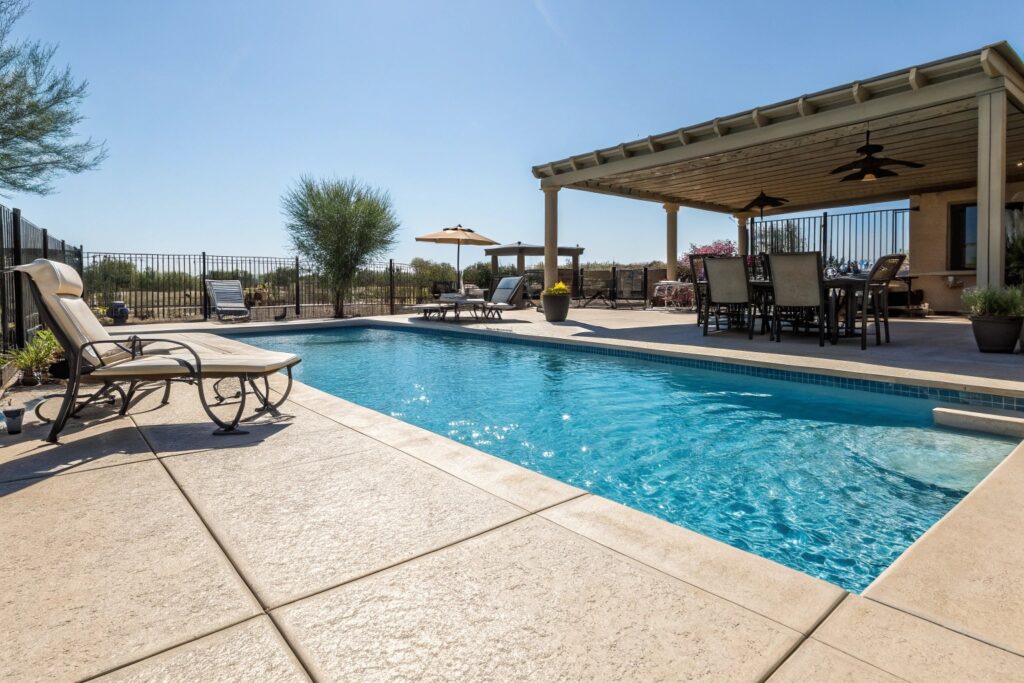
Pool decks are probably where heat-reflective concrete makes the biggest difference to your daily life. Traditional concrete pool surrounds can hit surface temperatures of 60-65°C on a summer afternoon. That’s hot enough to cause minor burns if you stand on it for more than a few seconds.
Heat-reflective pool decks stay around 15-20 degrees cooler – surface temperatures of 40-45°C instead of 65°C. Still warm, but actually walkable. Your kids can run from the house to the pool without doing that weird hot-foot dance. The cooler concrete around your pool also means cooler water temperatures, keeping your pool more refreshing in summer.
Popular finishes include exposed aggregate with light-colored stones for slip resistance, brushed finishes that are easy on bare feet, and stamped concrete in lighter colours. The slip resistance is actually better because you’re not constantly hosing them down with water to cool them off.
Energy Savings: How Cool Concrete Reduces Home Cooling Costs
When traditional concrete around your home absorbs heat all day, it radiates that warmth toward your house throughout the afternoon and evening. Heat-reflective concrete flips that equation. By bouncing solar radiation away, the air temperature around your home stays 2-4 degrees cooler. Every degree your air conditioner doesn’t have to fight against translates to about 10% savings on your cooling costs.
I had a client in East Toowoomba who redid their driveway with heat-reflective concrete a few summers back. They reckon their summer power bills dropped by around $40-60 per month. That’s $200-300 saved over the hot season, which means the upgrade starts paying for itself within a few years.
The savings are most noticeable for full driveways on the northern or western side of your home, large entertainment areas adjacent to air-conditioned rooms, and pathways running beside your home’s exterior walls. The Australian Government’s Your Home guide provides comprehensive information on energy-efficient building practices and how material choices impact your home’s overall performance.
Colour Options and Aesthetics in Heat-Reflective Concrete
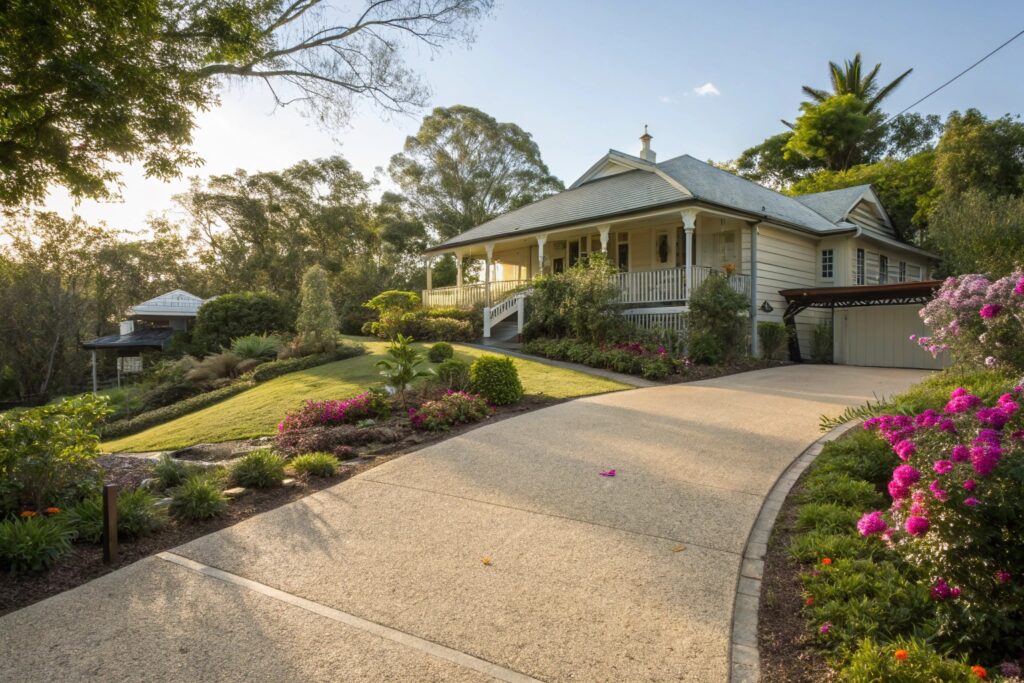
One of the biggest misconceptions is that you’re stuck with boring white surfaces. The key is understanding that it’s not just about visible colour – it’s about how the surface interacts with infrared radiation. Light beiges, sandy tones, and pale greys are your best performers while giving you a neutral look that works with most East Toowoomba home styles.
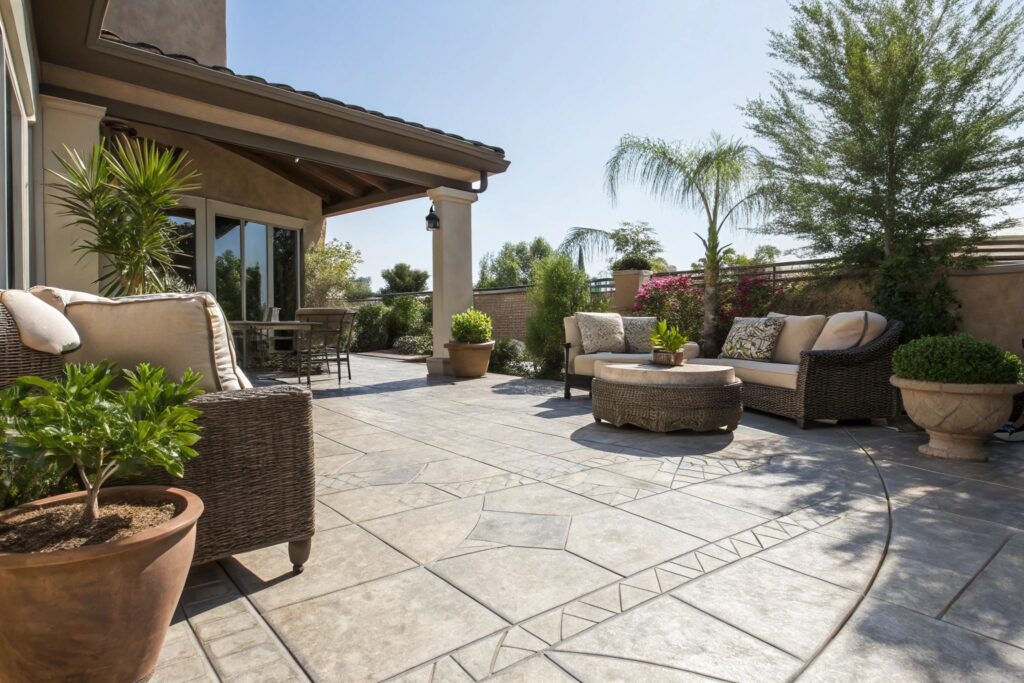
Exposed aggregate finishes let you use light-colored stones for visual interest through texture. Decorative stencilling or stamping can use lighter base colours with slightly darker accent patterns. Two-tone approaches work well for larger areas like patios.
The mistake some people make is going too dark thinking it’ll hide stains better. In East Toowoomba’s climate, dark charcoal or deep brown concrete will absolutely cook in summer. Quality heat-reflective concrete uses UV-stable pigments that won’t fade over time.
Installation Process for Cool Concrete in Queensland’s Climate
Installing heat-reflective concrete in East Toowoomba isn’t drastically different from standard concrete work. The best time to pour is during cooler months – roughly April through September. You can do it in summer, but the heat makes curing trickier to manage.
Site preparation is the same as any quality job – proper base with compacted road base, correct fall for drainage, and steel mesh reinforcement where needed. East Toowoomba’s reactive clay soils mean you can’t skip the base prep. Where heat-reflective concrete differs is in the mixing – the lighter colored cements and reflective additives need proper ratios for consistent performance.
Sealing is pretty much mandatory for heat-reflective concrete. A quality sealer protects from UV damage, prevents staining, and maintains reflective properties long-term. You’ll want to reseal every 2-3 years depending on traffic and exposure.
Keep Your Property Cool This Summer
If you’re tired of concrete surfaces that turn your East Toowoomba property into a heat trap every summer, heat-reflective concrete might be exactly what you need. Whether it’s a pool deck that’s too hot to walk on, a driveway that’s baking your home, or you’re just looking to cut those summer power bills, cooler concrete makes a real difference.
The technology’s proven, the energy savings are genuine, and you’re not sacrificing looks to get better performance. With East Toowoomba’s summers only getting hotter, investing in concrete that works with our climate instead of against it just makes sense.
Want to find out what heat-reflective concrete could do for your property? Get in touch for a free quote tailored to your specific project. We’ll walk you through the options, show you what’s possible for your home, and give you straight answers about costs and timelines.
