
The $15,000 Mistake That Could’ve Been Avoided
Last December, I got a call from Sarah, a homeowner in Rangeville who’d just spent $15,000 on a beautiful new pool area. She was devastated. Her kids couldn’t even walk barefoot on the concrete during summer afternoons – it was that hot. “I thought concrete was just concrete,” she told me. “I didn’t know there were options to keep it cooler.”

You’re Not Alone in This Problem
Sarah’s not alone. Across Rangeville, homeowners are dealing with scorching concrete surfaces that turn their dream outdoor spaces into no-go zones during Queensland’s brutal summer months. Your driveway becomes a heat trap. Your patio’s too hot to enjoy. And that pool deck you imagined lounging on? Forget about it.
There’s a Better Way
But here’s the thing – it doesn’t have to be this way.
Heat resistant concrete solutions Rangeville properties need aren’t some fancy new invention. They’re proven technologies that smart homeowners are using right now to keep their outdoor areas comfortable year-round. And with Toowoomba regularly hitting 35+ degrees in summer, choosing the right concrete solution isn’t just about comfort – it’s about making your investment actually usable.
What You’ll Learn in This Guide
In this guide, we’ll walk you through everything you need to know about heat-resistant concrete options for your Rangeville property. You’ll learn why standard concrete turns into a hotplate, which solutions actually work in our local climate, and what you can expect to pay. By the end, you’ll know exactly how to keep your outdoor spaces cool enough to enjoy, even on the hottest Queensland days.
Understanding Heat Absorption in Queensland Concrete
Why Your Concrete Feels Like a Frying Pan
Standard concrete wasn’t designed with Queensland summers in mind. Dark grey concrete absorbs heat like a sponge soaks up water. When the sun beats down on your driveway or concrete patio all day, that concrete stores the heat and radiates it back – sometimes staying hot well into the evening.
The science behind it’s pretty straightforward. Dark surfaces absorb more solar radiation than light ones. Regular concrete has a dark grey color that absorbs between 70-90% of the sun’s energy. That energy converts to heat, and concrete holds onto it for hours.
Rangeville’s Specific Climate Challenges
Rangeville sits in a unique position. We get the full force of Queensland’s summer heat, but we’re also dealing with Toowoomba’s elevation and weather patterns. Summer temperatures regularly hit 35+ degrees, and unlike coastal areas, we don’t always get that cooling afternoon breeze.
What this means for your concrete is simple – it gets hot, stays hot, and makes your outdoor spaces unusable for a good chunk of the year. Pool areas become dangerous for bare feet. Patios turn into heat islands. Even your driveway can be uncomfortable when you’re getting groceries from the car.
The Real Cost of Hot Concrete
Beyond the discomfort, hot concrete actually costs you money. When your patio’s too hot to use, you’re not getting value from your investment. Families end up staying indoors with the air conditioning cranked up instead of enjoying their outdoor spaces. Some homeowners even resort to laying down outdoor rugs or mats, which deteriorate quickly in the sun and need replacing every year or two.
Then there’s the damage factor. Extreme heat cycling – getting scorching hot during the day and cooling at night – puts stress on concrete. Over time, this contributes to cracking and surface deterioration. You’re shortening the lifespan of what should be a 20-30 year investment.
Heat-Resistant Concrete Solutions for Pool Areas
Light-Colored Concrete: The Foundation Solution
The simplest heat resistant concrete solutions Rangeville homeowners can choose is light-colored concrete. Instead of standard grey, you’re using concrete mixed with lighter aggregates or adding color during the mixing process.
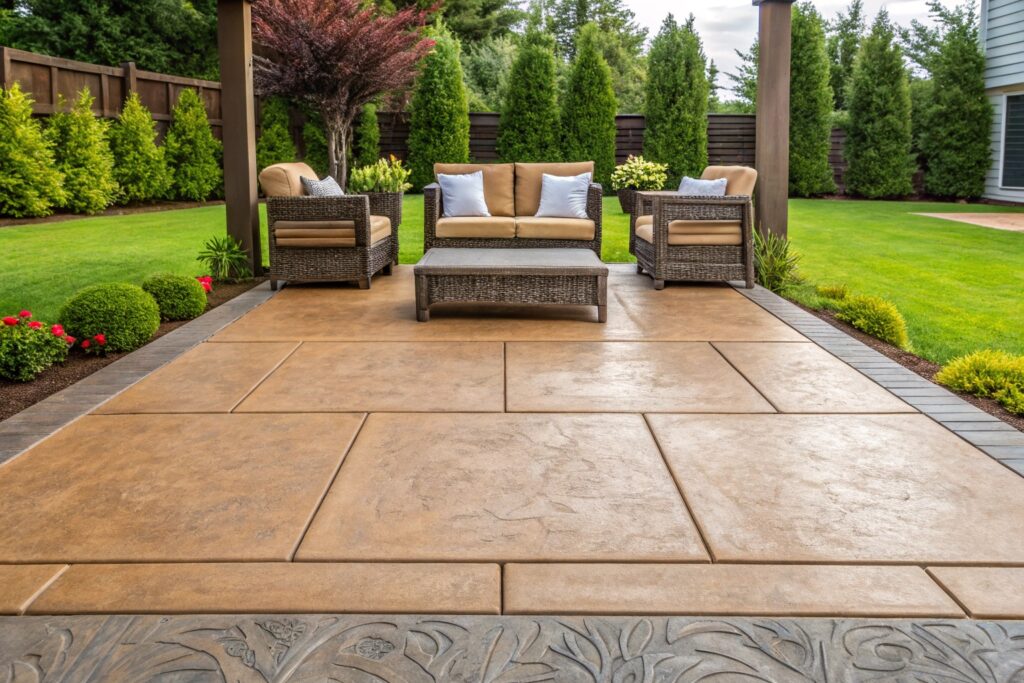
Light-colored concrete reflects more sunlight instead of absorbing it. A cream or tan colored concrete can stay 15-20 degrees cooler than standard grey concrete in direct sunlight. That’s the difference between uncomfortable and perfectly usable.
Best applications for light-colored concrete:
- Pool decks and surrounding areas
- Patios and entertaining spaces
- Pathways and walkways
- Driveways where aesthetics matter
Exposed Aggregate: Function Meets Style
Exposed aggregate concrete does double duty. The textured surface provides better grip around pool areas (helping prevent slips), and it reflects more heat than smooth concrete finishes.
The way it works is straightforward – during installation, the top layer of cement paste gets removed to reveal the aggregate (stones) underneath. These stones are typically lighter in color than the cement, and the varied surface texture means less direct surface area absorbing heat.
Pool owners in Rangeville love exposed aggregate because it stays cooler and looks great. You’re getting a high-end finish that’s functional, not just decorative.
Cool-Coating Technologies
If you’ve already got concrete around your pool, you don’t necessarily need to replace it. Cool-coating products can reduce surface temperature by up to 20 degrees compared to untreated concrete.
These coatings work by reflecting solar radiation. They’re specially formulated with reflective pigments that bounce sunlight away instead of absorbing it. The coating bonds to your existing concrete surface and typically lasts 5-7 years before needing reapplication.
The catch? Quality matters here. Cheap coatings might peel or fade within a year or two, especially around pool areas where they’re exposed to water and chemicals. You want a product specifically designed for Queensland conditions.
Cost Comparison: Standard vs Heat-Resistant Concrete
Understanding the Investment
Let’s talk numbers, because that’s what matters when you’re planning a concrete project.
Standard Grey Concrete (Rangeville average costs):
- Basic concrete driveway: $65-$85 per square meter
- Standard patio pour: $70-$90 per square meter
- Pool deck installation: $75-$95 per square meter
Light-Colored Concrete:
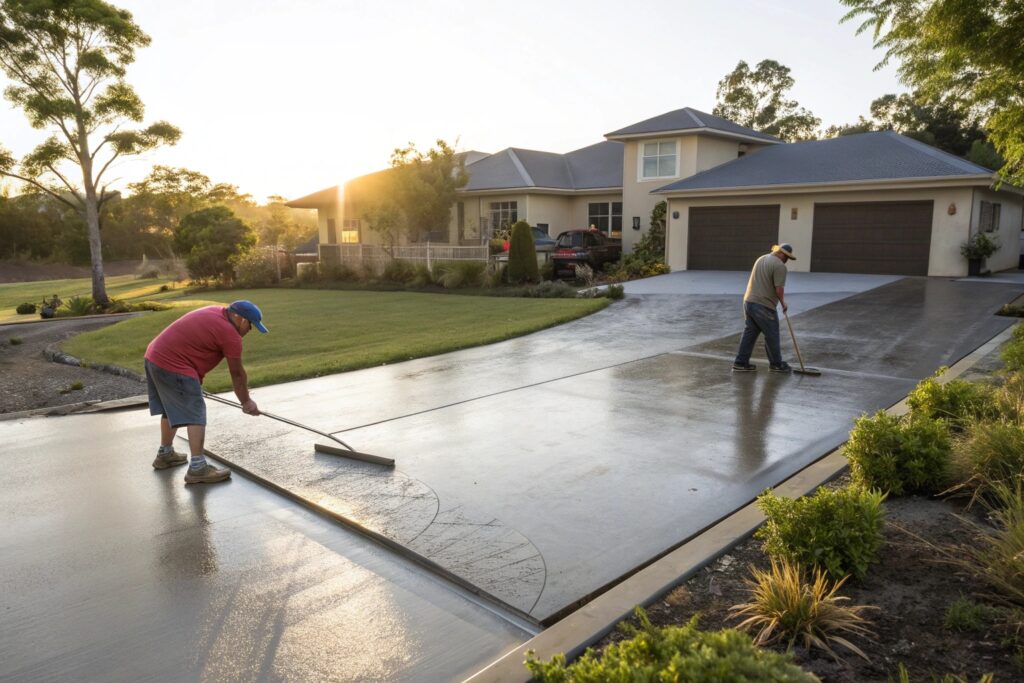
- Colored concrete driveway: $85-$110 per square meter
- Colored patio: $90-$115 per square meter
- Pool deck with color: $95-$120 per square meter
Exposed Aggregate (heat-resistant finish):
- Driveway: $100-$130 per square meter
- Patio: $105-$135 per square meter
- Pool deck: $110-$140 per square meter
Cool-Coating Application (existing concrete):
- Professional application: $25-$45 per square meter
- Expected lifespan: 5-7 years
- Reapplication needed after initial period
What You’re Actually Paying For
The price difference between standard and heat-resistant concrete isn’t just about the materials. You’re paying for specialized aggregates, color additives, and in some cases, different installation techniques.
For a typical Rangeville pool deck of 40 square meters, going with light-colored concrete instead of standard grey might cost you an extra $800-$1,200. Exposed aggregate could add $1,400-$2,000 to your project cost.
That sounds like a lot until you remember Sarah’s story from the start of this article. She spent $15,000 on a pool area she couldn’t use. Spending an extra $1,500 to make it functional isn’t an expense – it’s common sense.
Long-Term Value Calculation
Here’s how to think about the real cost. Standard concrete that’s too hot to use gives you maybe 6-7 months of comfortable use per year in Rangeville. Heat-resistant solutions give you 10-11 months.
That’s 40-50% more usability from your investment. If your concrete lasts 25 years, you’re gaining an extra 100+ months of use. Suddenly that $1,500 premium works out to about $15 per extra month of comfort. When you look at it that way, not choosing heat-resistant concrete seems like the expensive option.
Maintaining Cool Concrete Surfaces in Rangeville
The First Year: Setting Up for Success
New heat-resistant concrete needs proper care from day one. The curing process affects how well your concrete performs long-term, and that includes heat resistance properties.
During the first 28 days after installation, your concrete’s still curing. Keep it moist during this period – it actually helps the concrete reach full strength. In Rangeville’s dry climate, that might mean light watering once or twice daily for the first week.
After curing, seal your concrete. A good quality sealer protects the surface and can enhance heat-reflective properties. For pool areas, use a sealer rated for constant moisture exposure.
Seasonal Maintenance Schedule
Before Summer (September-October):
- Pressure wash to remove built-up dirt and grime
- Inspect for any cracks or damage
- Reapply sealer if needed (typically every 2-3 years)
- Check that drainage is working properly
During Summer (November-March):
- Hose down surfaces in the morning to start the day cooler
- Keep the surface clean – dirt and debris absorb extra heat
- Monitor for any new cracking from heat stress
- Consider shade solutions for the hottest parts of the day
After Summer (April-May):
- Deep clean to remove any summer buildup
- Repair minor cracks before winter rain makes them worse
- Assess whether cool-coating needs reapplication
Winter Maintenance (June-August):
- Clear drainage paths to prevent water pooling
- Address any repairs while weather’s cooler
- Plan any major upgrades for spring installation
What Kills Heat-Resistant Properties
The biggest enemy of cool concrete isn’t the sun – it’s neglect. Dirt buildup creates a dark layer on top of your light-colored concrete, defeating the whole purpose. Oil stains, leaf matter, and general grime all absorb more heat than clean concrete.
Pressure washing once or twice a year isn’t optional maintenance – it’s protecting your investment. A $150 pressure wash protects the thousands you spent on heat-resistant concrete.
Sealers also break down over time, especially in Queensland’s UV-intense environment. When your sealer fails, you lose protection and heat-reflective properties degrade. Plan on resealing every 2-3 years, or more often for pool decks with heavy chemical exposure.
Local Case Studies: Temperature Reduction Results
The Henderson Family – Harlaxton Street Pool Deck
The Hendersons installed a 45 square meter pool deck using light-colored stamped concrete in November 2023. Before installation, we measured their old dark grey concrete at 68 degrees Celsius on a 38-degree afternoon.
After installing cream-colored stamped concrete, we measured the same area under similar conditions. The new surface registered 47 degrees – a 21 degree reduction. Mrs. Henderson told us her kids actually use the pool now instead of just looking at it through the window.
Total project cost: $6,300. Extra cost for heat-resistant solution over standard: $1,100.
The Martinez Property – Driveway Transformation
This Rangeville driveway was replaced in February 2024 using exposed aggregate with lighter stones. The old driveway was unbearable – grocery bags would literally get hot sitting on it while they unloaded the car.
Temperature readings showed a 17-degree reduction compared to their original concrete. More than that, the textured surface meant better traction during Toowoomba’s sudden summer storms.
Total project cost: $8,900 for 85 square meters. Additional investment for exposed aggregate: $1,700.
The Robertson Patio – Coating Solution
Not everyone wants to replace existing concrete. The Robertsons had a perfectly good 4-year-old patio that was just too hot to use. We applied a professional-grade cool-coating in October 2023.
Surface temperature testing showed a 19-degree reduction on hot days. The coating’s held up well through one summer so far, though we’ll need to monitor how it performs over the next few years.
Total cost: $1,400 for coating and professional application. Expected to last 5-7 years before reapplication needed.
What These Results Mean for You
These aren’t cherry-picked success stories – they’re typical results for properly installed heat resistant concrete solutions Rangeville homeowners are getting. Temperature reductions of 15-25 degrees are standard, not exceptional.
The key factor is proper installation and choosing the right solution for your specific situation. Pool decks have different requirements than driveways. High-traffic areas need more durable solutions than decorative patios.
Choosing the Right Solution for Your Property

Pool Areas: Your Best Options
For pool decks and surrounding areas, prioritize both heat resistance and safety. Exposed aggregate or textured light-colored concrete works best. The texture prevents slips, and the heat resistance makes the space usable.
Avoid smooth finishes around pools – they’re slip hazards when wet, regardless of temperature. If you’ve already got smooth concrete, a textured cool-coating can solve both problems at once.
Budget at least $110-$140 per square meter for quality pool-area concrete. Going cheaper usually means compromising on either safety or heat resistance.
Driveways: Balancing Cost and Function
Driveways don’t need the same level of heat resistance as entertainment areas – you’re not walking barefoot on them for extended periods. But Rangeville’s sun still makes dark driveways uncomfortably hot.
Light-colored concrete gives you the best value here. You get significant heat reduction without the premium cost of exposed aggregate. If your budget’s tight, even choosing a lighter grey instead of dark grey makes a noticeable difference.
For established driveways showing age, cool-coating can extend their life while reducing heat. It’s not a permanent solution, but it buys you 5-7 years before you need to consider replacement.
Patios and Entertainment Areas: Where to Invest
This is where heat-resistant concrete makes the biggest lifestyle difference. Your patio should be the most comfortable outdoor space on your property – it’s where you entertain, relax, and spend time with family.
Invest in the best solution you can afford here. Stamped concrete with light colors looks great and stays cool. Exposed aggregate adds visual interest and heat resistance. Even decorative coatings can transform a basic patio into something special.
Remember, you’re creating a space you’ll use for decades. Spending an extra $2,000 on proper heat-resistant concrete for a 50 square meter patio means $80 per year over 25 years. That’s less than you’d spend on temporary shade solutions or outdoor rugs that need replacing.
Getting Started: Next Steps
If you’re planning a new concrete project in Rangeville, here’s your action plan:
- Measure your space accurately – costs are per square meter, so accurate measurements matter
- Get quotes from at least three contractors who specifically mention heat-resistant options
- Ask for temperature data from previous projects – good contractors track this
- Check for proper licensing – look for QBCC registration and insurance coverage
- Request a timeline that accounts for Toowoomba weather patterns
For existing concrete that’s too hot, start by getting a professional assessment. Sometimes a good cleaning and seal coat makes enough difference. Other times, coating or replacement makes more sense.
Protect Your Investment and Your Family’s Comfort
Heat resistant concrete solutions Rangeville homeowners choose today determine how much they’ll enjoy their outdoor spaces for years to come. Standard concrete might save you $1,000-$2,000 upfront, but it costs you comfort, usability, and eventually money when you need to address the problem later.
Sarah’s story from the beginning of this article has a happy ending. She ended up having her pool deck coated with a professional heat-resistant product. It’s not perfect – she wishes she’d known about these options before the original installation – but her kids can finally use the pool area she built for them.
You don’t have to make the same mistake. Whether you’re planning new concrete or fixing existing hot surfaces, the solutions exist. They’re not complicated, they’re not prohibitively expensive, and they work in Rangeville’s climate.
Ready to make your outdoor spaces comfortable year-round? Contact us for a free assessment of your property and a detailed quote on heat-resistant concrete options that fit your budget and needs.
