
With Toowoomba City experiencing over 250 days of sunshine annually and summer temperatures regularly exceeding 35°C, traditional concrete surfaces can reach scorching temperatures of 65°C or higher. Just last week, I watched my neighbour’s kids hop across their driveway like they was playing hot potato – except the concrete was the potato, and their feet were getting burned through their thongs.
The harsh Queensland sun doesn’t just make your concrete uncomfortable to walk on. It’s actively breaking down the structure, causing cracks that spread like spider webs across your driveway. Standard concrete absorbs heat all day, then radiates it back into your home well into the evening, forcing your air conditioner to work overtime. Your energy bills know exactly what I’m talking about.
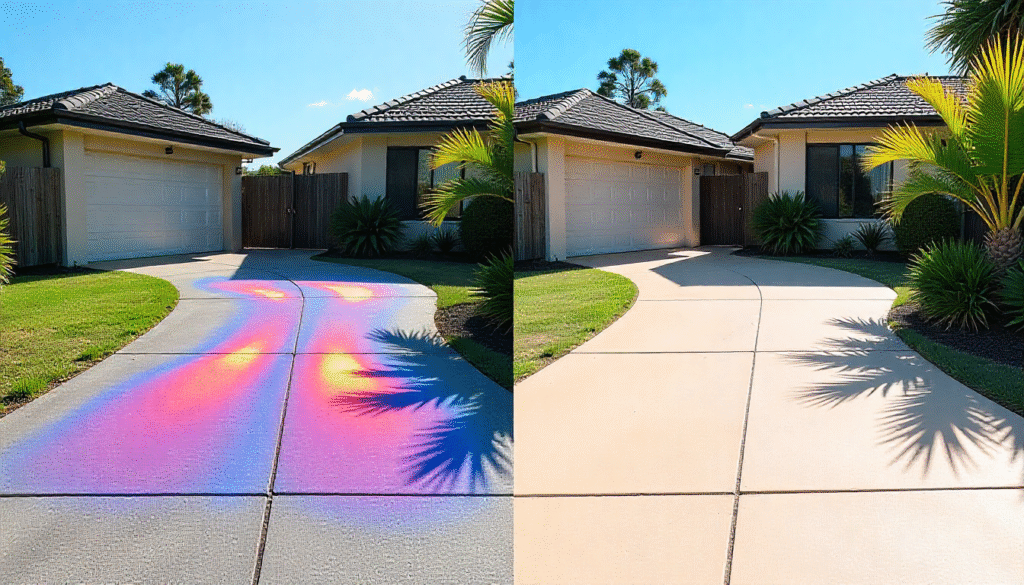
But here’s where heat resistant concrete Toowoomba City solutions come in. This specially engineered material reflects solar radiation instead of absorbing it, keeping surface temperatures up to 15°C cooler even during the hottest parts of the day. For homeowners dealing with scorching pool decks, cracking driveways, or outdoor areas too hot to enjoy, this technology offers real relief.
Throughout this guide, we’ll explore the specific climate challenges Toowoomba faces, break down different heat resistant concrete options available locally, analyze the costs versus long-term savings, showcase successful projects from Harristown to Middle Ridge, and provide a practical installation and maintenance roadmap that works with our unique weather patterns.
What is Heat Resistant Concrete and How Does it Work in Toowoomba?
Heat resistant concrete in Toowoomba City is specially formulated concrete that reflects up to 40% more solar radiation than standard concrete. It maintains surface temperatures 10-15°C cooler in Queensland heat by using light-colored aggregates and reflective materials like titanium dioxide or specialized polymers.
This advanced concrete reduces the urban heat island effect by 2-3°C around your property and lasts 30-40% longer than traditional concrete when exposed to our intense UV radiation. The technology works by bouncing solar energy away from the surface instead of absorbing it, similar to how a white shirt keeps you cooler than a black one on a hot day.
Understanding Toowoomba City’s Unique Concrete Challenges
Temperature Extremes and UV Exposure
Toowoomba’s weather is like that friend who can’t make up their mind. Morning temperatures in winter can dip below 5°C, then by afternoon in summer, we’re looking at 35°C plus. That’s a 30-degree swing your concrete has to handle – expanding and contracting like an accordion every single day.
The UV index here regularly hits extreme levels between 11 and 14 during summer months. That’s not just sunburn territory for your skin – it’s actively degrading the polymers in standard concrete. The Bureau of Meteorology data shows we cop more UV radiation than most Australian cities due to our elevation. This constant bombardment breaks down the cement paste, causing that chalky, faded look you see on older driveways around town.
Daily temperature variations put massive stress on concrete joints. Cool mornings cause contraction, hot afternoons trigger expansion. Do this dance 365 days a year, and you got yourself a recipe for cracks that’ll make your driveway look like a jigsaw puzzle.
Seasonal Weather Patterns Affecting Concrete
Summer in Toowoomba ain’t just about the heat – it’s about what that heat does to your concrete over months of punishment. December through February sees concrete surfaces regularly hitting 60-65°C. That’s hot enough to fry an egg, and definitely hot enough to cause thermal shock when those afternoon storms roll through.
Winter brings its own drama. While everyone thinks frost is just a morning inconvenience, it’s actually seeping into tiny cracks in your concrete. When water freezes, it expands by 9%, forcing those hairline cracks wider. Come spring, what started as invisible damage becomes visible problems.
Storm season throws another curveball. Those intense downpours we get can dump 100mm of rain in an hour. Standard concrete that’s been heat-damaged doesn’t drain properly, leading to pooling water that accelerates deterioration. It’s a vicious cycle – heat damage leads to poor drainage, which leads to more damage.
How Heat Resistant Concrete Technology Works
Reflective Aggregate Technology
The secret sauce in heat resistant concrete starts with the rocks – or as we call them in the trade, aggregates. Instead of using dark gravels that soak up heat like a sponge, this technology uses light-colored materials like white quartz or limestone. These materials naturally reflect solar radiation rather than absorbing it.
The Solar Reflectance Index (SRI) is basically a score from 0 to 100 that tells you how good a surface is at rejecting heat. Standard grey concrete scores around 35. Heat resistant concrete with reflective aggregates? We’re talking 65-75. That difference means your surface stays significantly cooler.
Local suppliers in Toowoomba now stock these specialized aggregates. Companies down at the Charlton Wellcamp Industrial area have started importing white granite chips from North Queensland, while others are sourcing recycled glass aggregates that work brilliantly for decorative finishes.
Advanced Polymer Additives
Here’s where the science gets interesting. Modern heat-dissipating compounds work at a molecular level to prevent heat absorption. These polymers create tiny air pockets throughout the concrete that act like insulation, stopping heat from penetrating deep into the slab.
UV stabilizers are the unsung heroes here. They’re like sunscreen for your concrete, preventing the breakdown of cement bonds that causes spalling and surface deterioration. Without them, you’d see degradation starting within 5 years. With them, your concrete looks fresh for decades.
Moisture barriers built into the mix do double duty. They stop water penetration during our wet season while also preventing the moisture that causes heat-related expansion. It’s like having a breathable waterproof jacket – keeps the bad stuff out while letting the concrete “breathe.”
Surface Treatment Options
Cool coating applications can be applied to existing concrete or incorporated into new pours. These coatings contain ceramic microspheres that reflect infrared radiation. Think of them as tiny mirrors bouncing heat away from your surface. A proper cool coating can drop surface temps by 10°C on its own.
Integral color systems aren’t just about looks – lighter colors directly impact heat absorption. A white or cream colored concrete stays up to 20°C cooler than standard grey. And before you worry about glare, modern systems use matte finishes that reduce reflection while maintaining cooling properties.
Textured finishes create micro-shade patterns across the surface. A broom finish or exposed aggregate texture increases surface area, allowing better heat dissipation. Plus, these textures improve slip resistance when wet – crucial around pool areas.
Benefits of Heat Resistant Concrete for Toowoomba City Properties
Energy Efficiency and Cost Savings
Let’s talk dollars and sense. A typical Toowoomba home with a standard concrete driveway and patio radiates heat into the house well into the evening. Your air conditioner runs overtime trying to combat this heat sink. With heat resistant concrete Toowoomba City installations, homeowners are seeing 15-20% reductions in cooling costs during summer months.
For a average 3-bedroom home in Harristown running ducted air conditioning, that’s roughly $300-400 saved each summer. Over the 25-year lifespan of the concrete, you’re looking at $7,500-10,000 in energy savings alone. The concrete literally pays for itself through reduced power bills.
Lower ambient temperatures around your home mean your air conditioning system works less hard, extending its lifespan. Instead of replacing that system every 10 years, you might get 12-15 years out of it. That’s another $5,000-8,000 saved right there.
Enhanced Durability in Queensland Climate
The numbers don’t lie – heat resistant concrete experiences 40% less thermal expansion and contraction compared to standard mixes. Less movement means less cracking. Less cracking means less water infiltration. Less water infiltration means your concrete lasts decades longer.
In Toowoomba’s climate, standard concrete typically needs major repairs or replacement after 15-20 years. Heat resistant varieties are pushing 25-30 years with minimal maintenance. Some installations from the early 2000s still look like they was poured yesterday.
Reduced cracking and spalling isn’t just about aesthetics. Every crack is an entry point for water, weeds, and further damage. By preventing these issues from starting, you avoid the cascade of problems that plague standard concrete. No more yearly crack filling, no more weed killer applications, no more patching compounds.
Improved Comfort and Usability
Remember that neighbour’s kid hopping across the driveway? With heat resistant concrete, surface temperatures stay cool enough for barefoot walking even in peak summer. Pool surrounds become usable all day instead of just morning and evening. Your outdoor spaces actually become liveable.
Pet owners know the struggle – dogs burning their paws on hot concrete, cats avoiding paved areas entirely. Heat resistant surfaces stay within safe temperature ranges for pet paws. Your furry friends can move freely without risk of burns or discomfort.
Outdoor entertainment areas transform from no-go zones to favourite gathering spots. That patio you avoided from noon to 5pm? Now it’s comfortable all day. BBQ areas don’t become furnaces. Garden pathways remain pleasant for afternoon strolls. Your outdoor investment becomes genuinely functional year-round.
Popular Applications in Toowoomba City Homes
Pool Decks and Surrounds
Pool areas cop the worst of Toowoomba’s heat. Standard concrete around pools can hit 70°C on a January afternoon – that’s literally hot enough to cause first-degree burns in seconds. Heat resistant concrete keeps these surfaces at manageable 45-50°C, still warm but not dangerous.
Safety benefits go beyond temperature. The specialized aggregates used provide better grip when wet, reducing slip hazards. The surface stays stable without the expansion joints that become trip hazards in standard concrete. Kids can run around without parents worrying about scraped knees or burned feet.
Design options have come a long way. Stamped patterns that mimic natural stone, colored aggregates that complement your pool tiles, even glow-in-the-dark additives for night swimming. One recent installation in Middle Ridge used recycled blue glass aggregates that sparkle like the ocean – stunning and functional.
Driveways and Parking Areas
Your car cops a beating sitting on superheated concrete. The radiant heat from standard driveways accelerates rubber deterioration in tyres, damages undercarriage components, and turns your vehicle into an oven. Heat resistant driveways keep vehicle temperatures 5-8°C cooler, protecting your investment.
Reduced tyre wear might sound minor, but it adds up. Tyres parked on cooler concrete last 15-20% longer. For a family with two cars, that’s saving a set of tyres every few years – roughly $800-1,200 in your pocket.
Aesthetic options for driveways have expanded beyond basic grey. Exposed aggregate finishes using local Toowoomba granite create stunning speckled effects. Colored concrete in earth tones complements landscaping. Some homeowners are even incorporating decorative borders or patterns that boost kerb appeal while maintaining heat resistance.
Outdoor Entertainment Areas
Patios and alfresco dining concrete floor areas become the heart of Queensland homes – when they’re actually usable. Standard concrete patios radiate heat upward, making evening dinners uncomfortable even after sunset. Heat resistant options keep these spaces 8-10°C cooler at surface level.
BBQ areas particularly benefit from cooler concrete. Standing over a hot grill on scorching concrete is nobody’s idea of fun. With heat resistant surfaces, the concrete doesn’t add to the heat load. Your BBQ chef stays comfortable, and guests don’t avoid the cooking area.
Garden pathways might seem like an afterthought, but they’re crucial for property flow. Cool pathways encourage garden exploration and maintenance. They connect spaces without creating heat corridors. One Rangeville property installed heat resistant pathways with integrated LED lighting – functional during the day, magical at night.
Cost Analysis: Investment vs. Long-Term Savings

Initial Investment Breakdown
Let’s be straight about costs. Heat resistant concrete carries a 15-25% premium over standard mixes. For a typical 50 square metre driveway, you’re looking at $6,000-7,500 for heat resistant versus $5,000-6,000 for standard. That extra $1,000-1,500 upfront makes some homeowners hesitate.
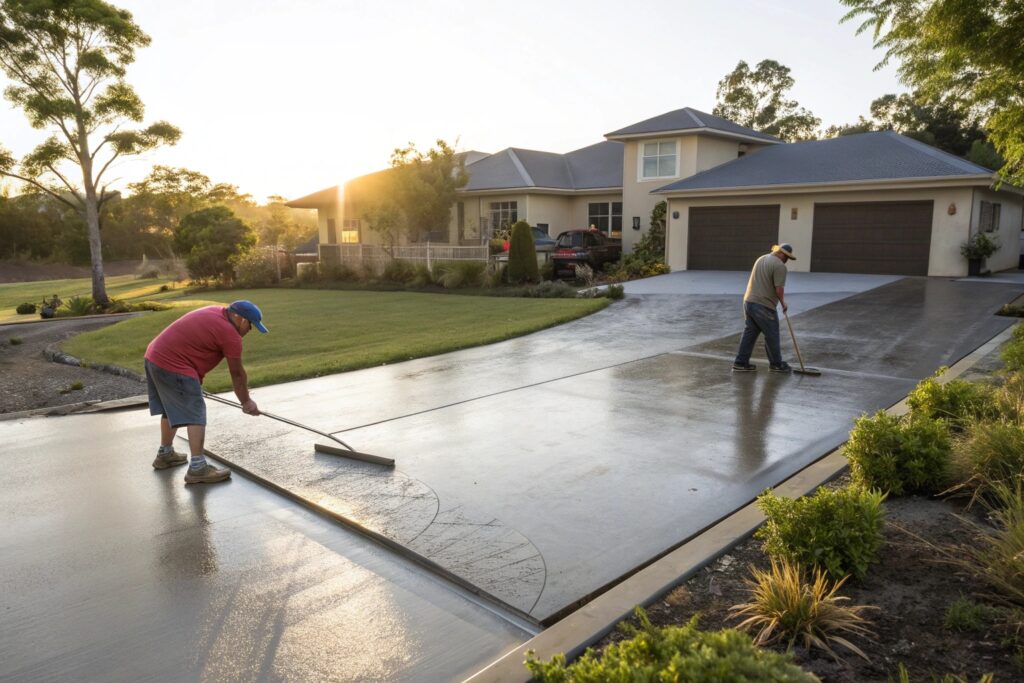
Concrete installation considerations barely change the equation. The same contractors, same equipment, same timeline. Some specialized finishes might add a day to the project, but labour costs remain similar. The premium is purely in materials – and those materials earn their keep.
Size-based pricing brings economies of scale. Larger projects see smaller percentage premiums. A 100 square metre area might only cost 12-15% more than standard, while small 20 square metre sections could hit that 25% premium. This makes whole-property installations more cost-effective than piecemeal upgrades.
Return on Investment Timeline
Energy savings kick in immediately. That first summer, you’ll notice the difference on your power bill. Most homeowners report breaking even on the initial investment within 5-7 years through energy savings alone. After that, it’s money in your pocket.
Maintenance reduction accelerates the payback. No annual sealing ($300-500), no crack repairs ($200-400 per incident), no premature replacement. These avoided costs add up to $500-800 yearly. Combined with energy savings, you’re looking at $800-1,200 annual benefit.
Property value increases seal the deal. Real estate agents in Toowoomba report heat resistant concrete adds 3-5% to property values. On a $650,000 home, that’s $19,500-32,500 in increased equity. The concrete investment becomes invisible compared to the value gained.
Local Case Studies: Toowoomba City Success Stories
The Morrison family in Harristown replaced their 20-year-old driveway last summer with heat resistant concrete. Temperature measurements show their new surface stays 12°C cooler than their neighbour’s standard driveway. Their quarterly power bill dropped by $127, and their kids actually play basketball on the driveway during school holidays.
A Middle Ridge pool renovation showcased the transformation possible. The original 1990s concrete was cracking, staining, and literally too hot to walk on by 11am. The new heat resistant surface with cool blue aggregates stays comfortable all day. The homeowner reports their pool area gets three times more use now.
Rangeville Shopping Village installed heat resistant concrete in their parking areas after customer complaints about burning feet. Before-and-after thermal imaging showed a 14°C temperature reduction at 2pm on comparable days. Customer dwell time increased by 18%, directly impacting retailer sales.
Installation Best Practices for Toowoomba’s Climate
Optimal Installation Timing
Timing is everything in concrete work in Toowoomba. April through September offers ideal conditions – moderate temperatures, lower humidity, minimal rain risk. The concrete cures properly without heat stress or moisture issues.
Temperature requirements for heat resistant concrete are surprisingly flexible. Unlike standard mixes that struggle below 10°C or above 30°C, these advanced formulations handle 5-35°C during pouring. Still, avoiding extremes gives best results.
Curing conditions make or break your installation. Heat resistant concrete needs consistent moisture for the first 7 days. In Toowoomba’s dry air, that means regular misting or curing blankets. Shortcuts here compromise the heat-reflecting properties you’re paying for.
Choosing the Right Contractor
Local expertise matters more than you’d think. Toowoomba’s soil movement, drainage patterns, and weather quirks require specific knowledge. A contractor from Brisbane might be excellent, but they won’t know about our black soil expansion issues.
Certification requirements include QBCC licensing, but also look for Australian Concrete Association accreditation. Ask specifically about heat resistant concrete experience – it handles differently during finishing and requires adjusted techniques.
Questions to ask include:
How many heat resistant projects have you completed locally?
Can you provide temperature testing data from previous installations?
What warranty do you offer on heat reflection properties?
Do you source aggregates locally or import them?
The answers reveal genuine expertise versus marketing talk.
Ready to Beat the Heat? Get Your Free Heat-Resistant Concrete Quote for Your Toowoomba Property
After seeing what heat resistant concrete can do for your home – from slashing energy bills to making your outdoor spaces actually liveable – the next step is getting specific numbers for your property. Every driveway, pool deck, and patio has different requirements, and cookie-cutter quotes don’t cut it in Toowoomba’s unique climate.
We offer free on-site assessments where we measure surface temperatures on your existing concrete, evaluate drainage patterns, and discuss your specific needs. Whether you’re tired of burning feet by the pool, watching cracks spread across your driveway, or paying massive cooling bills, we’ll show you exactly how heat resistant concrete Toowoomba City solutions solve your particular challenges.
