
Why Commercial Projects Face Stricter Rules
Commercial concrete work in Toowoomba falls under different regulations than residential projects. Council scrutinises these applications harder because they affect public safety, disabled access, and local traffic flow.
Every commercial project needs a development application, no matter how small. That tiny pathway at your Ruthven Street shop? Still needs approval. The small loading bay behind your warehouse in Wilsonton? Same deal.

Essential Documentation for Commercial Applications
You’ll need detailed engineering drawings stamped by a RPEQ (Registered Professional Engineer Queensland). Council won’t even look at your application without these professional plans.
Traffic impact assessments become necessary if your concrete work affects parking or vehicle movements. This includes new driveways, loading zones, or changes to existing car parks.
Disability access compliance is non-negotiable. Your concrete work needs to meet AS1428 standards for accessible design, including proper gradients, tactile indicators where required, and minimum pathway widths.
Environmental management plans in Toowoomba might be needed if you’re working near stormwater systems or if your project covers more than 200 square metres.
Common Rejection Reasons and How to Avoid Them
The Top Mistakes That Get Applications Knocked Back
Missing information tops the rejection list every time. Council won’t chase you for missing documents—they’ll just reject your application and make you start over. Double-check you’ve got every single document before submitting.
Incorrect measurements or calculations cause massive delays. If your plans show a 5-metre driveway but your application says 6 metres, that inconsistency triggers an automatic review.
Drainage Issues That Kill Applications
Poor stormwater management plans get more applications rejected than anything else. Council’s particularly strict about this since Toowoomba’s flash flooding issues in recent years.
If your plans don’t show exactly where water will go and how it’ll get there, expect rejection. Saying “water will flow to existing drainage” isn’t enough—you need specifics.
Properties near overland flow paths face extra scrutiny. If you’re in Mort Estate or near any of Toowoomba’s creek systems, your drainage plans need professional engineering input.
Boundary and Easement Problems
Building too close to boundaries without proper justification gets plenty of applications knocked back. That 500mm setback isn’t a suggestion—it’s a requirement.
Easements trip up heaps of property owners. You can’t just concrete over a sewer easement because you want extra parking. Council and utility companies both need to approve any work near easements.
Ignoring existing infrastructure causes instant rejection. If your plans don’t show existing water meters, telecommunications pits, or power poles, council assumes you haven’t done your homework.
Timeline Expectations for Different Approval Types
Standard Residential Approvals
Simple driveway approvals typically take 15 to 20 business days if everything’s correct first time. That’s assuming no requests for additional information and no objections from neighbours.
Add another week if council needs clarification on anything. Each back-and-forth communication resets parts of the assessment timeline.
Peak periods like September to November see longer waits. Everyone wants concrete work done before Christmas, so council gets swamped with applications.
Commercial and Complex Approvals
Commercial projects should budget 25 to 40 business days minimum. The bigger the project, the longer the assessment takes.
If your project needs referral to other agencies—like the Department of Transport for crossover modifications on state roads—add at least another month.
Projects requiring public notification add 15 business days to the timeline. This includes anything that might affect neighbourhood amenity or traffic patterns.
Fast-Tracking Your Application
Pre-lodgement meetings can save weeks off your approval time. For a few hundred dollars, you can get council to review your plans before formal submission and identify any issues.
Using council’s preferred consultants and engineers speeds things up. They know exactly what council wants to see and how they want to see it presented.
Submitting during quieter periods like February to April gets faster processing. Avoid September to December if you can—that’s when everyone rushes to get approvals.
How Professional Contractors Streamline the Approval Process

Why DIY Applications Often Fail
Property owners doing their own applications miss critical details that contractors catch automatically. You might measure your driveway perfectly but forget to note the location of the water meter.
Professional contractors know the unwritten rules. They know which council officers prefer which drawing styles, what level of detail actually matters, and when to provide extra information upfront.
The language matters too. Contractors know to write “proposed concrete driveway with maintained surface levels to achieve compliant drainage to existing lawful point of discharge” instead of “new driveway with proper drainage.”
What Experienced Contractors Do Differently
Good concrete contractors in Toowoomba City maintain relationships with council officers. They don’t try to sneak things through or argue about requirements—they work with council to get approvals done right.
They submit complete applications first time, every time. This means having template documents ready, standard drawing sets prepared, and checklists for different project types.
Professional contractors also carry the right insurances that council wants to see. Their public liability covers council’s requirements, and they’ve got all their QBCC licensing sorted.
The Hidden Value of Professional Help
Contractors know when you actually don’t need approval. Sometimes what seems like a major project falls under exempt development, saving you weeks and hundreds in fees.
They spot problems before they become expensive mistakes. That dream driveway design might look great on paper, but a good contractor knows it’ll never get past council’s drainage requirements.
Most importantly, they take responsibility for the approval. If something goes wrong with the application, it’s on them to fix it—not you spending weekends trying to understand council’s feedback.
Protecting Your Investment
Documentation You Should Always Keep
Keep every piece of paper related to your concrete project approval. Council approvals, engineering certificates, contractor invoices—everything. You’ll need these when you sell your property.
Take photos throughout the construction process. If council ever questions whether work was done according to the approval, these photos become your evidence.
Get written confirmation from council when your project’s complete. A final inspection certificate or written acknowledgement protects you from future compliance issues.
When Things Go Wrong After Approval
If your contractor doesn’t follow the approved plans, you’re still responsible. Council holds the property owner liable, not the contractor who did the work.
Changes during construction need council notification. Even minor variations from approved plans can technically void your approval if you don’t tell council.
Discovering unpermitted concrete work when buying a property creates massive headaches. Always get building and pest inspections that specifically check for unapproved structures.
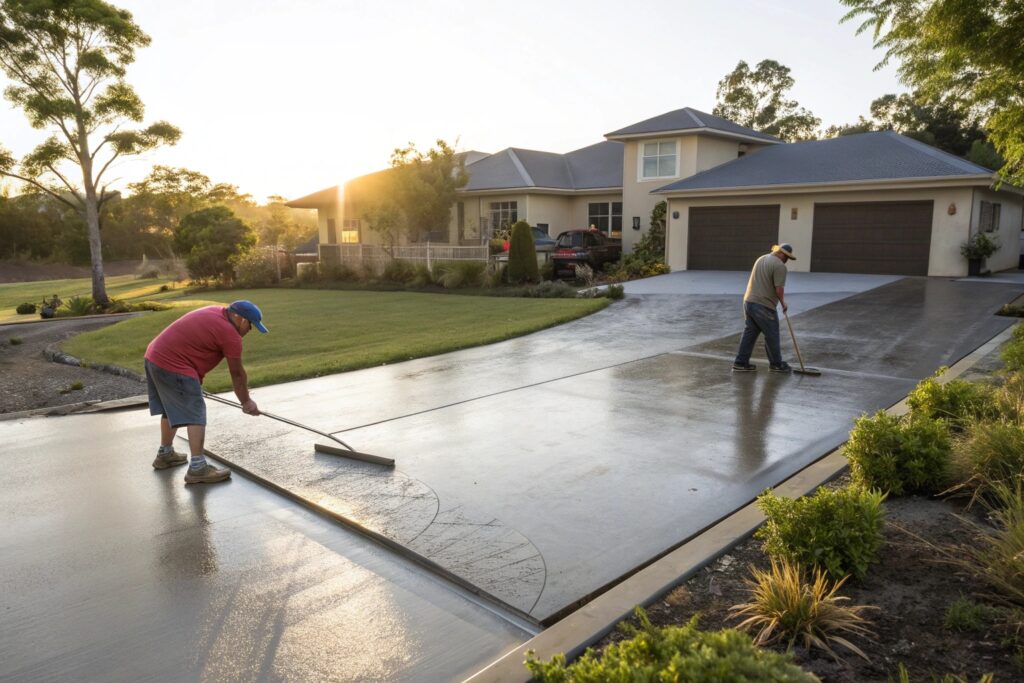
Making Your Toowoomba Concrete Project Happen
Getting through Toowoomba council concrete approvals doesn’t need to be the nightmare everyone makes it out to be. The key is understanding what council actually wants and giving it to them upfront.
Start your approval process early—at least two months before you want work to begin. This gives you buffer time for any delays or additional information requests.
Choose contractors who know Toowoomba Regional Council’s requirements inside out. The cheapest quote means nothing if they can’t get your project approved or, worse, build something that needs to be torn down.
Remember that council approval isn’t just red tape—it protects your investment and your neighbours’ properties. Properly approved concrete work adds value to your property and gives you peace of mind that everything’s been done right.
Whether you’re planning a simple driveway in Newtown or a complete outdoor entertainment area in Drayton, taking the time to get proper approvals saves money, stress, and potentially your entire project.
The difference between my mate’s $20,000 mistake and a successful concrete project comes down to one thing: knowing the rules before you start. Now that you know what Toowoomba Regional Council needs for concrete approvals, you can move forward with confidence instead of crossing your fingers and hoping for the best.
Ready to start your concrete project the right way? Contact local contractors who specialise in navigating Toowoomba council approvals. Get your project approved, built properly, and adding value to your property without the costly mistakes that catch so many property owners off guard.
